
Check Trucks’ Dimension and Specs With Freightliner VIN Decoder
What is a Freightliner VIN?
A Freightliner VIN, or Vehicle Identification Number, is a unique 17-character code assigned to every Freightliner truck during production. It serves as the truck’s official identifier, distinguishing one unit from another even if they share the same model year and configuration.
The VIN includes key information such as the country of manufacture, model line like Cascadia, M2 106, M2 112, 114SD, 122SD, or eCascadia, engine type such as Detroit Diesel, Cummins, or natural gas variants, cab style, axle configuration, production year, assembly plant, and serial number.
Where to Find the VIN on a Freightliner
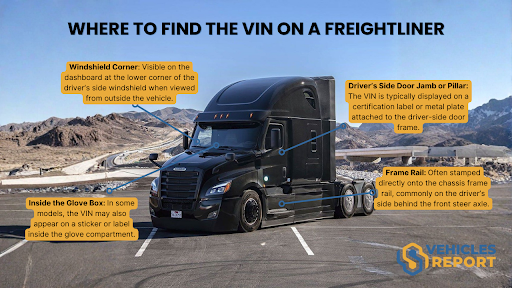
On the Freightliner truck, the VIN can be found on a few spots on the vehicle and on the vehicle’s paperwork. Examine these locations to have the VIN.
On the Truck’s Body
Examine these locations on the truck’s body to find the VIN of the vehicle.
- Driver’s Side Door Jamb or Pillar: The VIN is typically displayed on a certification label or metal plate attached to the driver-side door frame.
- Frame Rail: Often stamped directly onto the chassis frame rail, commonly on the driver’s side behind the front steer axle.
- Windshield Corner: Visible on the dashboard at the lower corner of the driver’s side windshield when viewed from outside the vehicle.
- Inside the Glove Box: In some models, the VIN may also appear on a sticker or label inside the glove compartment.
On the Vehicle’s Paperworks
- Vehicle registration
- Owner’s manual or service booklet
- Insurance documents
- Bill of sale
Why Do You Need to Decode the Freightliner VIN?
A Freightliner VIN is more than a serial number on the dashboard or door frame. It confirms the truck’s identity, prevents fraud, and builds confidence before any commercial transaction.
Ford Buyers
Decoding a Freightliner VIN helps buyers reduce risk and verify that the truck matches the seller’s description.
Confirm Factory Specifications
A VIN decoder verifies the exact model, engine option, such as Detroit Diesel or Cummins, transmission type, axle configuration, like 4×2 or 6×4, cab style, and installed fleet equipment.
Avoid Hidden Problems
Check accident records, title branding, theft status, mileage history, lien information, and recall data to ensure the truck’s background supports its advertised condition.
For Sellers
Sellers can use VIN data to present accurate and transparent truck details to potential buyers or fleet managers.
Present Verified Build Details
Providing confirmed factory specifications shows that Freightliner matches its listed engine rating, GVWR class, sleeper or day cab configuration, and installed components.
Support Proper Market Value
Clear VIN documentation helps justify pricing, especially for trucks equipped with advanced safety systems, air suspension, telematics, or fuel efficiency packages.
For Insurance and Registration
Insurance providers and registration authorities rely on the VIN to correctly classify commercial vehicles.
Ensure Precise Vehicle Identification
The VIN confirms engine output, axle setup, body configuration, and safety equipment required for compliance and coverage.
Avoid Administrative Delays
Accurate VIN information supports proper insurance categorisation and smoother registration, title transfer, or fleet documentation processing.
For Technicians and Service Centres
Technicians depend on VIN data to service heavy-duty trucks accurately and efficiently.
Confirm Correct Parts Selection
The VIN ensures compatibility for engine components, transmissions, brake systems, suspension assemblies, and emissions equipment.
Improve Diagnostic Accuracy
Accurate build data reduces repair errors and supports efficient maintenance of complex systems such as air brakes, electronic control modules, and aftertreatment systems.
How to Decode the Freightliner VIN
To decode the Freightliner VIN, you can follow these simple steps below, and be sure to get the vehicle report.
Find the VIN
Check on the vehicle’s doorjamb or on the vehicle’s paperwork to have the VIN. Can’t get them? Ask the seller directly.
Fill in the Form
Click on the form above and write down the VIN. After that, you may click on the “SUBMIT” button to submit the form.
Get the Report
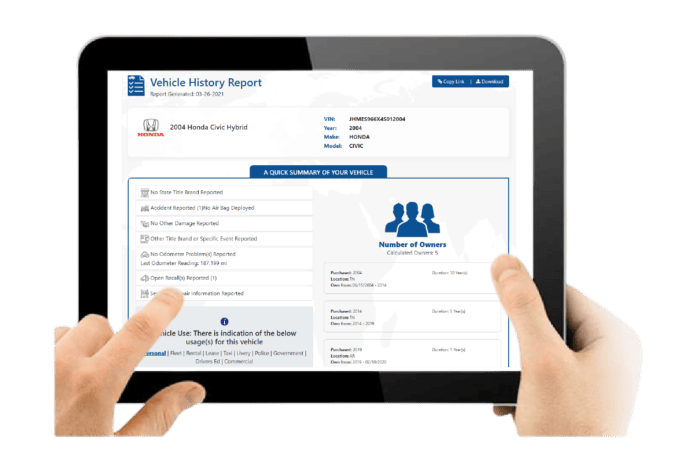
Wait for a few seconds to get the report generated. Then, examine the preview page to check its complete specifications information. Then, proceed to payment to get the full vehicle history report.
What Will You Get From the Freightliner History Report
A Freightliner history report highlights the truck’s factory specifications, ownership background, and key records that may influence safety, operational reliability, and long term commercial vehicle operating costs.
Vehicle Specifications
This section confirms how the Freightliner truck was originally configured at the factory, including engine platform, cab configuration, drivetrain setup, and vocational equipment.
Core Vehicle Configuration
Includes diesel engine platforms such as Detroit Diesel or Cummins engines, automated or manual transmissions, axle configurations, and models like Cascadia, M2 106, M2 112, Coronado, or Business Class trucks.
Production and Pricing Details
Displays model year, manufacturing information from Daimler Truck North America production facilities, and original MSRP or fleet configuration details used for commercial truck specifications.
Damage Records
Damage records identify incidents that may affect structural integrity, drivetrain components, or long term operational performance.
Collision and Structural Damage
Highlights accident related repairs involving cab structures, chassis frame rails, or other structural components of the commercial truck.
Fire and Environmental Damage
Shows flood, fire, severe weather, or environmental damage recorded in official reporting databases associated with the VIN.
Accident Records
Lists when accidents occurred and where they were officially recorded in reporting systems.
Accident Dates and Locations
Lists when accidents occurred and where they were officially recorded in reporting systems.
Structural and Safety Indicators
Highlights repairs affecting braking systems, steering components, air systems, or other safety related truck components.
Stolen Records
This check confirms whether the Freightliner truck has ever been reported stolen in official vehicle databases.
Theft Status Verification
Confirms whether the VIN appears in national or international stolen vehicle reporting systems.
Theft Record Details
Provides theft report dates, locations, and recovery status when available.
Auction History
Auction history shows whether the Freightliner truck appeared in commercial truck auctions or fleet resale channels.
Auction Sale Records
Displays auction dates, locations, and recorded sale prices from previous auction transactions.
Condition Reports and Photos
May include archived auction photos and condition summaries documenting the truck’s mechanical and exterior condition during auction listings.
Sales History
Sales records track listing activity across dealerships, fleet liquidation channels, and commercial truck marketplaces.
Listing and Sale Timeline
Shows when the Freightliner truck was listed, sold, or relisted across vehicle marketplaces.
Resale Activity Patterns
Highlights repeated resale cycles that may indicate fleet turnover, high mileage usage, or operational concerns.
Service & Maintenance Records
Service history helps determine whether the Freightliner truck received consistent maintenance during its working life.
Routine Service Documentation
Includes scheduled maintenance records such as oil services, inspections, and preventative fleet maintenance visits.
Repair and Maintenance History
Shows documented repairs involving diesel engines, transmissions, axles, suspension systems, or braking components.
Title Check
The title check confirms the vehicle’s legal status and identifies branding that may affect resale or registration.
Title Status Confirmation
Indicates whether the title is clean or carries a branded designation.
Branded Title Details
Flags salvage, rebuilt, flood damaged, or other branding recorded in official title databases.
Mileage History
Mileage records help verify vehicle usage and detect irregular odometer patterns.
Recorded Odometer Entries
Displays historical mileage readings together with corresponding reporting dates.
Rollback Detection Indicators
Helps identify irregular mileage patterns or suspected odometer rollback events.
Lien or Loan Check
This section identifies financial claims that may affect ownership transfer.
Active Lien Status
Confirms whether a lender currently holds a legal financial interest in the vehicle.
Outstanding Loan Details
Shows unpaid balances that must be settled before completing a sale.
Ownership Records
Ownership history outlines how many individuals or companies previously owned the Freightliner truck.
Number of Previous Owners
Indicates the total number of recorded owners associated with the VIN.
Ownership Duration and Region
Shows ownership timelines and registration regions while protecting personal or company information.
Recall Information
Recall information confirms whether Freightliner issued safety recalls for the truck.
Recall Notice Details
Lists recall dates, affected components, and reasons for manufacturer issued safety notices.
Repair Completion Status
Confirms whether recall related repairs were completed and properly documented.
How to Break Down a Freightliner VIN
To break down the Freightliner’s VIN, you will need to know the classification and what each code represents. To make it simple, here’s how you read a VIN on a Freightliner.
Sample VIN: 1FVACWDT4CHBW5940
WMI (World Manufacturer Identifier)
Characters 1–3: 1FV
- 1 = Country of origin: United States
- F = Manufacturer: Freightliner
- V = Vehicle type: Truck
VDS (Vehicle Descriptor Section)
Characters 4–8: ACWDT4
- A = Model line or series
- C = Chassis or cab configuration
- W = Brake system or weight class
- D = Engine type
- T = Vehicle configuration or drivetrain
- 4 = Check digit used to validate the VIN
VIS (Vehicle Identifier Section)
Characters 10–17: CHBW5940
- C = Model year: 2012
- H = Assembly plant
- BW5940 = Sequential production number unique to the truck
Why You Should Use Our Freightliner VIN Decoder
Compared to the other VIN decoder services, we have our own leverage that you can get and enjoy. For example, one report costs less than $20, and we do not compromise its quality. Here’s few more reasons why you should use our Freightliner VIN decoder.
Quick Decoding Process
Enter the 17-character Freightliner VIN to access detailed factory build information in seconds. The report outlines the exact model, engine configuration, such as Detroit Diesel or Cummins, axle setup, cab type, wheelbase, production year, and assembly plant, helping you confirm the truck’s original specifications.
Commercial Vehicle Support Around the Clock
Need clarification on accident records, title status, prior usage, or a specific Freightliner model like Cascadia, M2 106, Coronado, or Columbia? Live chat assistance is available 24/7 to help you review and understand every section of your report.
Auction and Fleet History Visibility
If the Freightliner was previously sold through auction or fleet liquidation channels, the report includes archived sale records and up to ten auction photos. These images can provide insight into the prior operating condition and any visible damage at the time of sale.
Lifetime Access to Vehicle History Report
Unlike the other service, our vehicle history report does not expire. Download it, store it for compliance records, or revisit it when comparing multiple trucks for your business. Access remains available whenever you need to review the information.
Decode the Freightliner VIN in Seconds
Use our service to decode any Freightliner’s VIN and get the vehicle history report.
Decode VIN From Other Makes
If you want to decode another car, no need to worry! We can do that too. Click on the options below.
Check Other Services
You can use our other services to get more information about the vehicle.
Own a classic car? Retrieve its original window sticker with our service.
Access the vehicle’s original details, including standard features, optional packages, and more.
Enter the VIN to generate a detailed vehicle history report.
Don’t have the VIN available? Use the license plate number to pull up the report.
Decode Freightliner’s VIN Now
Decoding any kind of heavy-duty trucks, including the Freighliner is now easy. You can use our service to get the full specs and vehcile history report.
FAQs About Freightliner VIN Decoder
How many characters are in a Freightliner VIN?
A Freightliner Vehicle Identification Number (VIN) is made up of 17 alphanumeric characters. This standardized 17-character format has been used for all motor vehicles manufactured from 1981 onward, ensuring consistent identification across the industry.
How many cc is a 2518 truck engine?
The 2518 truck engine designation, commonly associated with Tata LPK or LPT 2518 models, typically refers to a 5,883 cc 6-cylinder diesel engine. Many of these trucks are equipped with Cummins 6BT 5.9 or ISBe 5.9 engines. However, similar 2518 models from other manufacturers, such as Ashok Leyland, may use a 5,660 cc diesel engine depending on the configuration.
What model is a Freightliner?
Freightliner manufactures a broad lineup of commercial trucks, with the Cascadia serving as its flagship Class 8 long-haul model. The current range also includes medium-duty options like the M2 106 and 112 Plus, severe-duty models such as the 108SD, 114SD, and 122SD, as well as electric trucks including the eCascadia and eM2.
Which Freightliner engine is best?
The Detroit Diesel DD15 is widely regarded as one of the most well-balanced engine options for Freightliner trucks. It delivers strong reliability, fuel efficiency, and performance, making it a preferred choice for long-haul operations and a popular engine option in the Freightliner Cascadia.