
Check All Types of Honda With Our Free VIN Decoder
Purchasing a used Honda is dangerous if you do not check everything thoroughly. Be sure to decode the Honda VIN and verify the key identity information, including specifications, trim, engine, transmissions, estimated market value, MSRP, and more!
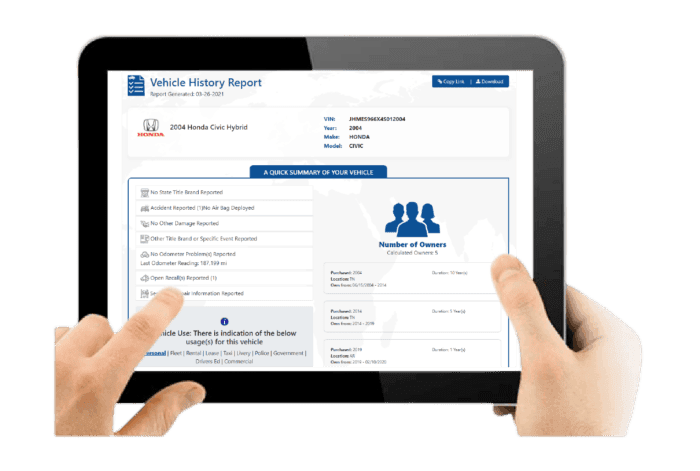
What is a Honda VIN?
A Honda VIN (Vehicle Identification Number) consists of a 17-digit code assigned to every vehicle. Even though a vehicle has the same year, model, and trim, the assigned VIN is different. Unlike other identifiers, the VIN has crucial information about the vehicle, including the serial number, trim, and even the engine code.
What Can a Honda VIN Decoder Show?
Our free Honda VIN decoder helps verify the vehicle's original factory information before you buy, sell, insure, or maintain it.
Model
Identify the exact Honda model, such as the Civic, Accord, CR-V, Pilot, HR-V, Passport, Odyssey, or Ridgeline.
Model Year
Confirm the production year to ensure it matches the seller's description and registration documents.
Engine Specifications
View the original engine configuration, including displacement, fuel type, cylinder layout, horsepower category, and engine family.
Transmission
Determine whether the vehicle left the factory with a CVT, manual transmission, or automatic transmission.
Drivetrain
Check whether your Honda uses Front-Wheel Drive (FWD), All-Wheel Drive (AWD), or another drivetrain configuration.
Body Style
Identify whether the vehicle is a sedan, hatchback, coupe, SUV, pickup truck, or minivan.
Trims
Confirm the specific trim of a Honda, which prevents you from overpaying for unnecessary add-ons.
Factory MSRP
View the original Manufacturer's Suggested Retail Price based on the factory configuration.
Market Value
Get an estimated market value based on the decoded vehicle specifications to better understand today's pricing.
Where to Find the VIN on a Honda
Finding the VIN on a Honda is quite easy; just examine the body parts and paperwork.
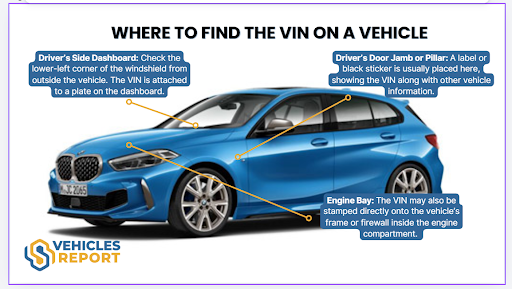
On the Vehicle
Inspect the following areas carefully to get the VIN on a Honda.
- Dashboard: On the driver’s side, where the dashboard meets the windshield. It is visible from outside the vehicle.
- Driver’s Door Jamb: Printed on a sticker or label attached to the door pillar when the driver’s door is open.
- Passenger Floor Area: Located beneath a small plastic cover or plate on the floorboard near the door.
- Engine Bay: Stamped onto the bulkhead or firewall inside the engine compartment.
Paperwork and Vehicle Documents
If you can't access your Honda directly, you can also find the VIN in several official documents:
- Insurance Card: Check your insurance card, policy documents, or your insurance provider's mobile app.
- Vehicle Registration: The VIN is printed on your registration certificate issued by your state.
- Vehicle Title: Look for the VIN on the vehicle title to confirm ownership information.
- Loan or Finance Documents: If your Honda is financed, the VIN is listed on your loan agreement or lender paperwork.
- Service and Maintenance Records: Previous repair invoices, maintenance records, or Honda dealership service documents often include the VIN.
How to Decode the Honda VIN?
Decoding the Honda VIN number does not need to be challenging. All you have to do is follow these simple steps below:
Find the VIN
Check on the driver’s side doorjamb or on the title documentation to find the VIN. Can’t get them? Ask the seller.
Fill Out the Form
Once you have the VIN, write it down on the form above. Then, click on the button to submit the form.
Get the Report
Wait for a few seconds to get the report generated. Then, proceed to payment to get the full vehicle history report.
Why Decoding the Honda VIN is Important?
A VIN is the official identity of a Honda vehicle. Before buying, selling, or servicing a Honda, decode the VIN to get verified and accurate vehicle information.
For Buyers
Decoding a Honda VIN helps buyers understand the vehicle’s original specifications and background before making a purchase.
Confirm Key Specifications
Verify the exact Honda model, engine type, trim level, drivetrain configuration, and production year to ensure the vehicle matches the seller’s description.
Review Background Records
Verify the exact Honda model, engine type, trim level, drivetrain configuration, and production year to ensure the vehicle matches the seller’s description
How to Read Honda VIN?
A Honda VIN is a 17-character combination of letters and numbers that uniquely identifies each vehicle. It is divided into three main sections: WMI, VDS, and VIS. Each section provides specific information about the vehicle’s origin, specifications, and production details.
WMI (WMI (World Manufacturer Identifier))
Characters 1–3: 5FP
- 5 = Country of origin: United States
- FP = Manufacturer: Honda of America Mfg., Inc.
VDS (VDS (Vehicle Descriptor Section))
4–9 characters: YK3F84
- Y = Vehicle line: Honda Ridgeline
- K = Series or trim level (Sport, RTL, or related variant depending on configuration)
- 3 = Body style: 4-door Crew Cab pickup
- F = Engine: 3.5L V6 i-VTEC
- 8 = Safety and restraint system configuration
- 4 = Check digit used to validate the VIN
VIS (VIS (Vehicle Identifier Section))
10–17 characters: LB006358
- L = Model year: 2020
- B = Assembly plant: Lincoln, Alabama, USA
- 006358 = Unique sequential production number
Classic Honda VIN Decoding Supported
Own a vintage Honda?
VehiclesReport also supports many classic Honda VIN formats. Older Honda vehicles may use VINs with fewer than 17 characters, depending on their production year. Our classic Honda VIN decoder helps identify original vehicle specifications and manufacturing details for many classic models.
Need more? Get a Honda Vehicle History Report
A Honda vehicle history report provides detailed background information beyond basic specifications. By looking up the Honda VIN, buyers and sellers can review factory data, ownership records, and past incidents to better understand the vehicle’s true condition before any transaction.
Vehicle Specifications
This section outlines Honda’s original factory configuration and trim details that influence equipment levels, performance, and resale value.
Engine and Trim Configuration
Includes engine type, transmission, drivetrain, and trim level such as LX, EX, Sport, or Touring.
Production and Pricing Details
Displays production year, assembly plant, and original MSRP to verify factory specifications.
Engine and Trim Configuration
Includes engine type, transmission, drivetrain, and trim level such as LX, EX, Sport, or Touring.
Production and Pricing Details
Displays production year, assembly plant, and original MSRP to verify factory specifications.
Damage Records
Damage records reveal previously reported incidents that may affect structural integrity, safety systems, or overall vehicle reliability.
Structural and Collision Damage
Identifies frame damage and impact-related repairs recorded through insurance or official sources.
Environmental Damage Reports
Shows flood, fire, or other non-collision damage linked to the VIN.
Structural and Collision Damage
Identifies frame damage and impact-related repairs recorded through insurance or official sources.
Environmental Damage Reports
Shows flood, fire, or other non-collision damage linked to the VIN.
Accident Records
Accident history provides documented collision events that may impact safety, performance, or long-term durability.
Accident Dates and Locations
Lists when accidents occurred and where they were reported.
Repair and Condition Indicators
Highlights potential structural or mechanical concerns following reported incidents.
Accident Dates and Locations
Lists when accidents occurred and where they were reported.
Repair and Condition Indicators
Highlights potential structural or mechanical concerns following reported incidents.
Stolen Vehicle Records
This check confirms whether the Honda has ever been reported stolen, reducing legal and ownership risks.
Theft Status Verification
Confirms past or current stolen vehicle reports associated with the VIN.
Theft Record Details
Provides theft dates and reported locations for transparency.
Theft Status Verification
Confirms past or current stolen vehicle reports associated with the VIN.
Theft Record Details
Provides theft dates and reported locations for transparency.
Auction History
Auction history shows whether the Honda was previously sold through wholesale channels due to trade-ins, repossession, or insurance claims.
Auction Sale Records
Displays auction dates, sale prices, and transaction history.
Condition Notes and Photos
May include listed condition details and archived auction images when available.
Auction Sale Records
Displays auction dates, sale prices, and transaction history.
Condition Notes and Photos
May include listed condition details and archived auction images when available.
Sales History
Sales records track listing activity over time, helping identify repeated resale attempts or pricing concerns.
Listing and Sale Timeline
Shows when the Honda was listed, sold, or relisted.
Market Activity Patterns
Highlights short-term relisting trends that may suggest unresolved issues.
Listing and Sale Timeline
Shows when the Honda was listed, sold, or relisted.
Market Activity Patterns
Highlights short-term relisting trends that may suggest unresolved issues.
Service and Maintenance Records
Maintenance records demonstrate how consistently the Honda was serviced, helping evaluate long-term care and reliability.
Routine Service Documentation
Includes oil changes, scheduled maintenance, and dealership visits.
Repair and Maintenance History
Shows documented repairs and part replacements over time.
Routine Service Documentation
Includes oil changes, scheduled maintenance, and dealership visits.
Repair and Maintenance History
Shows documented repairs and part replacements over time.
Title Check
The title check verifies the legal standing of the Honda and identifies any branding that may affect value.
Title Status Confirmation
Indicates whether the title is clean or branded.
Branded Title Details
Flags salvage, rebuilt, flood, or lemon designations in official records.
Title Status Confirmation
Indicates whether the title is clean or branded.
Branded Title Details
Flags salvage, rebuilt, flood, or lemon designations in official records.
Mileage History
Mileage records provide historical odometer readings to confirm usage patterns and detect possible inconsistencies.
Recorded Odometer Entries
Displays mileage readings with corresponding reporting dates.
Rollback Detection Indicators
Helps identify irregular mileage patterns or suspected odometer tampering.
Recorded Odometer Entries
Displays mileage readings with corresponding reporting dates.
Rollback Detection Indicators
Helps identify irregular mileage patterns or suspected odometer tampering.
Lien or Loan Check
This section identifies outstanding financial obligations that could legally affect ownership transfer.
Active Lien Status
Confirms whether a lender has a legal claim on the vehicle.
Outstanding Loan Details
Shows unpaid balances that must be cleared before completing the purchase.
Active Lien Status
Confirms whether a lender has a legal claim on the vehicle.
Outstanding Loan Details
Shows unpaid balances that must be cleared before completing the purchase.
Ownership Records
Ownership history outlines how many individuals previously owned the Honda and how frequently it changed hands.
Number of Previous Owners
Indicates total recorded owners linked to the VIN.
Ownership Duration and Region
Shows ownership length and registration regions without revealing personal data.
Number of Previous Owners
Indicates total recorded owners linked to the VIN.
Ownership Duration and Region
Shows ownership length and registration regions without revealing personal data.
Recall Information
Recall information confirms whether Honda has issued safety-related repairs and whether those repairs were completed.
Recall Notice Details
Lists recall dates, affected components, and reasons for issuance.
Repair Completion Status
Confirms whether recall-related corrective actions were performed and resolved.
Recall Notice Details
Lists recall dates, affected components, and reasons for issuance.
Repair Completion Status
Confirms whether recall-related corrective actions were performed and resolved.
Why Users Trust Our Honda VIN Decoder?
Buying or selling a Honda without reviewing its background can lead to unexpected issues later. Our Honda VIN Decoder provides verified vehicle specifications and detailed history records, helping you check important information before completing any transaction.
Fast and Straightforward Process
Enter the Honda VIN and receive your vehicle history report within minutes.
Responsive Support 24/7
Need help with your order or have questions about your report? Our customer support team is available day and night.
Auction Photos When Available
If the Honda was sold at auction, you will see the snapshot of the current listing.
Unlimited Access to Decode
Decode both modern 17-character Honda VINs and many classic Honda VIN formats at no cost.
Worldwide VIN Coverage
Decode Honda VINs from vehicles sold in North America and many international models.
No Hidden Fees or Subscriptions
Use the free Honda VIN Decoder without subscriptions or surprise charges.
Verify Any Honda Specs and Details With VIN
Pick a Honda model to view its details.
- Accord
- Civic
- Insight
- S2000
- Element
- Pilot
- Accord Hybrid
- Civic Hybrid
- Ridgeline
- CR V
- Odyssey
- FIT
- Accord Crosstour
- CR Z
- Crosstour
- FIT EV
- Accord Plug-In Hybrid
- HR V
- Passport
- Prelude
- Civic Type R
- Clarity Plug-In Hybrid
- Civic SI
- Clarity Electric
- Clarity Fuel Cell
- CR V Hybrid
Check Other Honda Services
You can use our other services to get more information about the vehicle.
Check Honda recall
Catch Unfixed Honda Recalls, so you can confirm the vehicle is actually safe to drive or should go to the dealer for free service.
Get Honda Window Stickers
Access original build information, equipment lists, and manufacturer specifications.
License Plate Lookup
No VIN available? A license plate search can still provide verified vehicle details.
Decode Your Honda VIN Now
Before any transaction happens, checking the VIN of a Honda vehicle can reduce the risk by knowing the identity of Honda. Enter the VIN below to get free factory specs instantly, then decide if you want the full paid history report to confirm its real story. Don’t let a pretty paint job hide a flooded past.
Frequently Asked Questions About Honda VIN Decoder
Is a Honda VIN decoder free?
Yes. Our Honda VIN Decoder lets you check factory specifications like the model year, trim, engine, MSRP, and estimated market value for free.
How to decode a Honda car VIN number?
A 17-character Honda VIN is divided into three main sections: the World Manufacturer Identifier (characters 1–3), the Vehicle Descriptor Section (4–9), and the Vehicle Identifier Section (10–17). Important positions include the 1st digit for country of origin, the 10th digit for model year, and the 11th digit for assembly plant. Characters 4–8 typically describe the model, body style, and engine configuration.
What does the 10th letter in a VIN number mean?
The 10th character of a 17-digit VIN indicates the vehicle’s model year. This coding system uses letters and numbers, excluding I, O, Q, U, Z, and 0, and repeats every 30 years. For instance, A can represent 1980 or 2010, while B corresponds to 1981 or 2011, depending on the production cycle.
How to read a Honda serial number?
Honda engine and equipment serial numbers usually start with a 3 to 7-character model prefix, often beginning with the letter G, followed by a 7-digit serial number such as GJEA-1234567. For cars and motorcycles, identification is based on the 17-character VIN, where the 10th digit confirms the model year.
What does C in CRV mean?
In the Honda CR-V name, the letter C is most commonly understood to mean Comfortable, as in “Comfortable Runabout Vehicle.” Although some interpret it as Compact in “Compact Recreational Vehicle,” the widely accepted meaning reflects the model’s focus on comfort, practicality, and everyday usability.
How do you know if your Honda is EX or LX?
Decode the VIN to verify your Honda's original trim level, including LX, Sport, EX, EX-L, Touring, Elite, and more.