
See the Complete Specifications Information of a Mitsubishi With VIN
Enter your Mitsubishi VIN below to view factory specifications and vehicle details. Don’t forget to include the vehicle history report to receive the full information about the vehicle.
What is a Mitsubishi VIN?
A Mitsubishi Vehicle Identification Number, or VIN, is a unique 17-character code assigned to every Mitsubishi during manufacturing. Even if two vehicles share the same model year, colour, and trim, each VIN is exclusive to one specific vehicle.
Mitsubishi models such as the Outlander, Outlander PHEV, Eclipse Cross, ASX, Triton, and Pajero Sport are available with different engine options, drivetrains, and trim grades depending on the market.
The VIN confirms the exact factory build, including engine type, transmission, drivetrain configuration such as 2WD, AWD, or Super All-Wheel Control, production year, assembly plant, and the vehicle’s individual serial number.
What Information Can You See with a Mitsubishi VIN?
Our free Mitsubishi VIN Decoder reveals key factory specifications that help verify the vehicle's original configuration.
Using our free Mitsubishi VIN Decoder, you can verify:
Model Year
Confirm the exact production year and identify the correct Mitsubishi generation before purchasing, selling, registering, or servicing the vehicle.
Model
Identify the original Mitsubishi model, including the Outlander, Outlander PHEV, Outlander Sport, Eclipse Cross, Eclipse, Lancer, Lancer Evolution, Mirage, Galant, Montero, Montero Sport, 3000GT, and other Mitsubishi vehicles.
Factory Trim
Verify the original trim level, including ES, SE, SEL, GT, Limited, Black Edition, Ralliart, Evolution GSR, Evolution MR, and other market-specific configurations.
Engine & Powertrain
Identify the original factory-installed engine, including 1.5L MIVEC, 2.0L MIVEC, 2.4L MIVEC, 3.0L V6, 3.8L V6, 4G63 Turbo engine found in Lancer Evolution models, and Outlander PHEV hybrid powertrain, depending on the model and production year.
Transmission
Verify whether the vehicle was originally equipped with a CVT, automatic transmission, manual transmission, dual-clutch transmission (selected performance models), or other factory-installed transmission options.
Drivetrain
Confirm whether the vehicle was originally built with Front-Wheel Drive (FWD), All-Wheel Drive (AWD), Four-Wheel Drive (4WD), or Mitsubishi Super All-Wheel Control (S-AWC).
Factory Equipment
Verify original factory-installed features such as Super All-Wheel Control (S-AWC), Mitsubishi Connect, Rockford Fosgate® Premium Audio, Forward Collision Mitigation, and off-road equipment, depending on the model and trim.
Country of Manufacture
Confirm the vehicle's original manufacturing location and production origin.
Original MSRP
Review the manufacturer's suggested retail price when the vehicle was originally sold.
Estimated Market Value
Compare your Mitsubishi with current used vehicle market conditions based on its decoded specifications.
Where to Find the VIN on a Mitsubishi
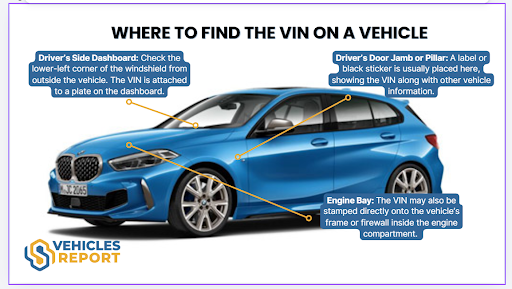
The Mitsubishi VIN is displayed on the vehicle and documented on official paperwork. It is important to check that the VIN matches in all locations before completing any purchase or ownership transfer.
On the Vehicle
Inspect these common areas carefully:
- Dashboard: Lower driver-side corner of the windshield, visible from outside the vehicle.
- Driver’s Door Jamb: Certification label or sticker on the door pillar where the door closes.
- Engine Bay: In some models, the VIN may be stamped on the firewall or within the engine compartment.
On the Vehicle’s Paperwork
If you don’t have the vehicle, you can find the VIN on:
- Registration Certificate: The VIN is printed on the official registration document.
- Insurance Documents: Listed to identify the insured vehicle.
- Service and Maintenance Records: Often recorded by authorised Mitsubishi service centres and dealerships.
How to Decode the Mitsubishi VIN?
To decode the Mitsubishi VIN, you can use our Mitsubishi VIN decoder service to receive full information about specifications and records.
Find the VIN
Examine the vehicle’s windshield or the paperwork to obtain the VIN. If you can’t find it, you may ask the seller instead.
Fill Out the Form
Click on the form, then write down the VIN on the form above. Then, click on the button to submit the form.
View Mitsubishi specification preview
Check the preview page to examine the specifications. Need any more information? Proceed to payment to get the full vehicle history report.
Find the VIN
Examine the vehicle’s windshield or the paperwork to obtain the VIN. If you can’t find it, you may ask the seller instead.
Fill Out the Form
Click on the form, then write down the VIN on the form above. Then, click on the button to submit the form.
View Mitsubishi specification preview
Check the preview page to examine the specifications. Need any more information? Proceed to payment to get the full vehicle history report.
Why Do You Need to Decode the Mitsubishi VIN?
Before purchasing a used Mitsubishi, you must check everything thoroughly to make sure the car background. Aside from the buyer and seller, the technician and insurance agent can use the Mitsubishi VIN decoder to check the car’s condition.
Buyers
Decoding a Mitsubishi VIN helps buyers reduce risk and confirm that the vehicle matches the seller’s description.
Confirm Factory Specifications
A VIN decoder verifies the exact Mitsubishi model, engine type, such as MIVEC petrol or turbo diesel, transmission option (manual, CVT, or automatic), drivetrain configuration like FWD or AWD, trim level, and factory-installed features.
Avoid Scams
Check the vehicle key specifications details to ensure the vehicle supports its advertised condition.
How to Read the Mitsubishi VIN Number?
The VIN assigned to a Mitsubishi is made from 17-digit numbers and letters–each of them has a different meaning. Here’s a quick read on a Mitsubishi VIN
WMI (WMI (World Manufacturer Identifier))
1-3 characters: JA4
- J = Country of origin: Japan
- A = Manufacturer: Mitsubishi Motors
- 4 = Vehicle type: Passenger vehicle (SUV)
VDS (VDS (Vehicle Descriptor Section))
4–9 characters: AR3AU0
- A = Model line (Outlander Sport / RVR series)
- R = Drive type or configuration (AWD variant)
- 3 = Series or trim designation
- A = Engine type (2.0L 4-cylinder)
- U = Restraint or safety system
- 0 = Check digit used to validate the VIN
VIS (VIS (Vehicle Identifier Section))
10–17 characters: LU021077
- L = Model year: 2020
- U = Assembly plant
- 021077 = Sequential production number unique to the vehicle
How to Decode a Classic Mitsubishi VIN?
Mitsubishi has produced vehicles for decades, including many models created before modern VIN databases became widely available. Older Mitsubishi vehicles may use shorter VIN formats, chassis numbers, or manufacturer-specific identification systems that require specialized decoding.
Our Classic Mitsubishi VIN Decoder supports many Mitsubishi VINs and chassis numbers ranging from 5 to 14 characters, helping identify older vehicles that cannot be decoded using standard modern VIN tools.
Need More Than Mitsubishi VIN Specs?
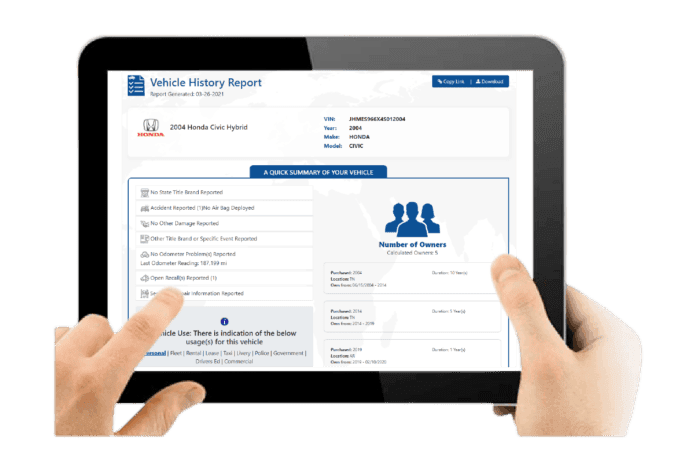
A Mitsubishi vehicle history report delivers far more than surface-level details. It outlines factory specifications, ownership patterns, and potential warning signs to help buyers, sellers, and lenders assess the vehicle with clarity and confidence.
Vehicle Specifications
This section confirms how the Mitsubishi left the factory, including its intended market position, whether practical commuter, family SUV, or performance-oriented variant.
Core Vehicle Configuration
Details engine options such as petrol, diesel, hybrid, or plug-in hybrid, transmission type including manual or CVT, drivetrain layout like FWD, AWD, or Super All-Wheel Control, and trims such as ES, SE, SEL, Black Edition, or Ralliart.
Production and Equipment Details
Identifies the model year, manufacturing plant, and original equipment fitted at production, including advanced safety systems, infotainment features, premium interiors, and off-road enhancements where applicable.
Core Vehicle Configuration
Details engine options such as petrol, diesel, hybrid, or plug-in hybrid, transmission type including manual or CVT, drivetrain layout like FWD, AWD, or Super All-Wheel Control, and trims such as ES, SE, SEL, Black Edition, or Ralliart.
Production and Equipment Details
Identifies the model year, manufacturing plant, and original equipment fitted at production, including advanced safety systems, infotainment features, premium interiors, and off-road enhancements where applicable.
Damage Records
Damage history highlights reported incidents that may influence structural integrity, performance, or long-term durability.
Collision and Structural Damage
Documents accident-related repairs that could affect frame structure, suspension geometry, steering components, or alignment accuracy.
Fire and Environmental Damage
Reports flood, fire, hail, or severe weather exposure that may compromise electronics, interior materials, or mechanical systems.
Collision and Structural Damage
Documents accident-related repairs that could affect frame structure, suspension geometry, steering components, or alignment accuracy.
Fire and Environmental Damage
Reports flood, fire, hail, or severe weather exposure that may compromise electronics, interior materials, or mechanical systems.
Theft Records
This section checks whether the Mitsubishi has ever been reported stolen, helping reduce legal or financial complications.
Theft Status Verification
Confirms any active or historical theft reports linked to the VIN.
Theft Record Details
Provides available information on reported dates, recovery status, and associated regions.
Theft Status Verification
Confirms any active or historical theft reports linked to the VIN.
Theft Record Details
Provides available information on reported dates, recovery status, and associated regions.
Auction History
Auction data shows whether the vehicle previously moved through dealer auctions, lease returns, repossessions, or insurance sales channels.
Auction Sale Records
Lists auction dates, locations, and recorded selling prices where available.
Condition Reports and Photos
May include inspection notes, condition summaries, and archived auction images that offer insight into past exterior or mechanical condition.
Auction Sale Records
Lists auction dates, locations, and recorded selling prices where available.
Condition Reports and Photos
May include inspection notes, condition summaries, and archived auction images that offer insight into past exterior or mechanical condition.
Service & Maintenance Records
Service documentation reflects how consistently the vehicle was maintained throughout its life.
Routine Service Documentation
Includes oil services, scheduled maintenance visits, inspection logs, and system updates where recorded.
Repair and Maintenance History
Shows documented repairs or part replacements involving engines, CVT systems, Super All-Wheel Control components, suspension assemblies, or electronic modules.
Routine Service Documentation
Includes oil services, scheduled maintenance visits, inspection logs, and system updates where recorded.
Repair and Maintenance History
Shows documented repairs or part replacements involving engines, CVT systems, Super All-Wheel Control components, suspension assemblies, or electronic modules.
Title Check
The title review confirms Mitsubishi’s legal standing and identifies any branding that could impact resale or registration.
Title Status Confirmation
Indicates whether the title is clean or carries a branded classification.
Branded Title Details
Flags salvage, rebuilt, flood-damaged, or other official title designations recorded in government databases.
Title Status Confirmation
Indicates whether the title is clean or carries a branded classification.
Branded Title Details
Flags salvage, rebuilt, flood-damaged, or other official title designations recorded in government databases.
Lien or Loan Check
Financial checks help prevent complications during ownership transfer.
Active Lien Status
Confirms whether a financial institution currently holds a legal claim on the vehicle.
Outstanding Loan Details
Identifies unresolved loan balances that must be cleared before completing a sale.
Active Lien Status
Confirms whether a financial institution currently holds a legal claim on the vehicle.
Outstanding Loan Details
Identifies unresolved loan balances that must be cleared before completing a sale.
Ownership Records
Ownership history outlines how many parties previously registered the Mitsubishi and how long each retained it.
Number of Previous Owners
Specifies the total recorded owners associated with the VIN.
Ownership Duration and Region
Shows approximate ownership periods and registration regions while safeguarding personal information.
Number of Previous Owners
Specifies the total recorded owners associated with the VIN.
Ownership Duration and Region
Shows approximate ownership periods and registration regions while safeguarding personal information.
Recall Information
Recall data confirms whether Mitsubishi has issued safety-related notices affecting the vehicle.
Recall Notice Details
Lists recall dates, affected components such as airbags, braking systems, fuel systems, or driver-assistance features, and the reason for the recall.
Repair Completion Status
Indicates whether recall repairs were completed and officially recorded, helping ensure the vehicle meets manufacturer safety standards.
Recall Notice Details
Lists recall dates, affected components such as airbags, braking systems, fuel systems, or driver-assistance features, and the reason for the recall.
Repair Completion Status
Indicates whether recall repairs were completed and officially recorded, helping ensure the vehicle meets manufacturer safety standards.
Why Our Mitsubishi VIN Decoder Stands Out
Unlike the other Mitsubishi VIN decoder service providers, our tool has become top of mind for people who want to check a Mitsubishi.
Fast Process
No need to wait for minutes to get the complete specifications of the vehicle
Responsive Customer Service
Our customer service is available 24/7 to answer your questions in less than a minute.
Always Free Factory Specs
No credit card. No registration. No hidden fees. Just your build sheet instantly, every time.
Unlimited Decodes
Decode one VIN or one hundred. We never limit your access or charge per lookup.
Trusted & Updated Data Sources
Our data combines DMV databases, insurance providers, Copart, IAAI, and more!
No Expiration Date
Our vehicle history report has no expiration date. You can access the report any time you like.
Decode Any Mitsubishi VIN
Use our Mitsubishi VIN decoder to check the specifications and records.
Check Other Services
You can use our other services to get more information about the vehicle.
Mitsubishi Recall Check
See if the vehicle is part of it with our recall check, and schedule the free dealer fix.
Mitsubishi Window Sticker Lookup
Access the original Monroney label displaying all factory options and packages.
License Plate Lookup
Enter the license plate number to bypass VIN entry, then decode or purchase the vehicle history report.
Use the Mitsubishi VIN Decoder
Be a smart buyer and seller, run the Mitsubishi VIN decoder to ensure that the vehicle has no bad records.
FAQs About Mitsubishi VIN Decoder
Can I tell what model my car is by the VIN?
Yes, you can identify your car’s exact make, model, trim level, and engine type using the 17-character Vehicle Identification Number (VIN). Characters 4 to 8 provide specific details about the vehicle’s brand, body style, and engine configuration.
What does the VIN number mean on a Mitsubishi?
A Mitsubishi Vehicle Identification Number (VIN) is a 17-character code that serves as a unique identifier for each vehicle. It reveals key details such as the manufacturer, assembly plant, model year, and factory-installed features, and is used for recalls, insurance, service records, and ownership verification.
What are the most common problems with Mitsubishi?
Common issues reported in Mitsubishi vehicles, especially the Outlander and certain older models, include transmission problems such as CVT failure or rough shifting, engine hesitation or stalling, and electrical faults affecting sensors or infotainment systems. Some owners also report suspension wear, rust concerns, and airbag-related recalls.
What is Mitsubishi's most iconic vehicle?
The Lancer Evolution is one of the most legendary performance cars ever built. The car won four WRC drivers' titles and dominated the tuner scene. The 3000GT VR-4 was a 1990s Japanese supercar with active aerodynamics and all-wheel drive. The Outlander PHEV pioneered the plug-in hybrid SUV segment. The Montero/Pajero won the Dakar Rally an incredible 12 times.