
Check the Actual Specs of Kawasaki by Decoding the VIN
Enter the Kawasaki VIN into the form below to check the actual specifications of the bike. Don’t forget to get the vehicle history report to see its past records, like auction, accident, recall, and even the lien/loan history.
What is a Kawasaki VIN?
A Kawasaki Vehicle Identification Number is a unique 17-character code assigned to every Kawasaki motorcycle, ATV, or side-by-side during production. Even if two units share the same model year and colour, each VIN is exclusive to one specific vehicle.
Kawasaki models such as the Ninja, Z Series, Versys, Vulcan, KX, KLX, Teryx, and Brute Force come in different engine displacements, fuel systems, frame designs, trim variations, and market specifications. The VIN confirms the exact factory build, including engine size, series, and production plant.
What Does a Kawasaki VIN Reveal?
A Kawasaki VIN contains valuable information about how the vehicle was originally built. Decoding it helps verify factory specifications before purchasing, restoring, registering, or servicing a motorcycle or powersport vehicle. Here’s what you’ll see when decoding a Kawasaki VIN:
Model Year
Identify the production year to verify the seller's listing, determine compatibility with replacement parts, and understand the vehicle's generation.
Model
Confirm the exact Kawasaki model, whether it's a Ninja, Z, Versys, Vulcan, KLR, KLX, KX, Eliminator, Brute Force, Teryx, Mule, or Jet Ski.
Engine Configuration
Verify the original engine installed by Kawasaki, including engine family, displacement, cylinder layout, and fuel type where available, including Single-cylinder, Parallel Twin, Inline-Four, V-Twin, or Supercharged Inline-Four.
Factory Trim or Edition
Some Kawasaki models are available in multiple trims or special editions. VIN decoding helps identify the original factory configuration. For example, ABS, SE, SE Performance, KRT Edition, 40th Anniversary Edition, Adventure, or Traveler.
Transmission
Depending on the model, the VIN may identify the original transmission configuration to help verify factory specifications.
Manufacturing Plant
The VIN identifies the country where the vehicle was manufactured, helping distinguish production markets and factory origins.
Original MSRP
When available, the decoder can display the manufacturer's original suggested retail price, giving buyers a useful reference when comparing current asking prices.
Estimated Market Value
View an estimated market value based on the decoded factory specifications, helping buyers and sellers better understand the vehicle's current position in the market.
Where to Locate the VIN on a Kawasaki?
The Kawasaki VIN can be found directly on the vehicle and on official documents. Always compare both locations before completing a purchase to ensure the numbers match.
On the Motorcycle Frame
Inspect these common areas carefully:
- Steering Head / Frame Neck: The VIN is typically stamped into the metal frame near the handlebars, just behind the front fork. Turn the handlebars left or right to see it clearly.
- Frame Rail (Lower Section): On some models, especially off-road bikes and ATVs, the VIN may be stamped along the lower frame rail.
- Under the Seat or Near the Engine Mount: Certain models place a VIN label or stamp near the engine mounting area or beneath the seat for additional identification.
If You Don't Have Access to the Vehicle
You can also find your Kawasaki VIN on official documents, including:
- Vehicle Title: Confirms the VIN associated with legal ownership.
- Registration Certificate: Lists the VIN used to register the vehicle.
- Insurance Documents: Most insurance policies display the insured vehicle's VIN.
- Finance or Loan Documents: Financing paperwork identifies the Kawasaki by VIN.
- Maintenance Records: Service invoices and repair records often include the VIN for vehicle identification.
How to Decode the Kawasaki VIN?
Find the VIN on the frame neck or on the vehicle’s documentation. If you can’t have it, ask the seller directly.
Find the VIN
Find the VIN on the frame neck or on the vehicle’s documentation. If you can’t have it, ask the seller directly.
Fill in the Form
Once you have the VIN, be sure to click on the form and click on the button to submit the VIN.
View the Factory Specifications
Our decoder instantly retrieves available factory information, including the model year, engine configuration, vehicle type, manufacturing details, and other production specifications.
Find the VIN
Find the VIN on the frame neck or on the vehicle’s documentation. If you can’t have it, ask the seller directly.
Fill in the Form
Once you have the VIN, be sure to click on the form and click on the button to submit the VIN.
View the Factory Specifications
Our decoder instantly retrieves available factory information, including the model year, engine configuration, vehicle type, manufacturing details, and other production specifications.
Why You Should Decode a Kawasaki VIN?
A Kawasaki VIN is more than just a serial number stamped on the frame. It confirms the motorcycle’s authenticity, factory specifications, and recorded history before any transaction is complete. Whether it is a Ninja sportbike, Vulcan cruiser, Versys adventure model, Z naked bike, or a Teryx side-by-side, decoding the VIN ensures you know exactly what you are buying or selling.
For Buyers
Whether you're purchasing a Ninja sportbike, a KLR adventure bike, a Brute Force ATV, or a Teryx Side x Side, decoding the VIN helps you make a more informed buying decision.
Confirm Factory Specifications
A VIN decoder verifies the exact model, engine displacement, series, trim variation, and more.
Identify Factory Special Editions
Kawasaki regularly releases special editions such as KRT Edition, Anniversary Edition, SE, and Adventure models. Decoding the VIN helps confirm whether these features were factory-installed or added later.
What Will You Get From the Kawasaki History Report?
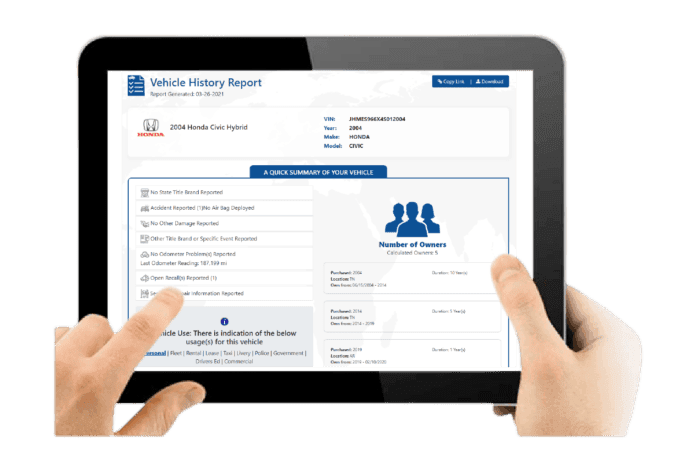
After decoding the VIN and reviewing the preview page, you will receive the complete vehicle history report for your Kawasaki motorcycle. Below is what the full report includes.
Vehicle Specifications
This section outlines Kawasaki’s original factory build, confirming engine displacement, model series, trim or edition, transmission type, and intended riding purpose, such as street, touring, sport, or off-road use.
Core Motorcycle Configuration
Includes engine types such as parallel-twin, inline-four, or single-cylinder configurations, gearbox type, fuel system, ABS availability, and model variants like Ninja, Z, Versys, Vulcan, or KX series.
Production and Pricing Details
Displays model year, manufacturing plant (commonly Japan, Thailand, or Indonesia), and original MSRP to verify factory-installed features, performance packages, and technology equipment.
Core Motorcycle Configuration
Includes engine types such as parallel-twin, inline-four, or single-cylinder configurations, gearbox type, fuel system, ABS availability, and model variants like Ninja, Z, Versys, Vulcan, or KX series.
Production and Pricing Details
Displays model year, manufacturing plant (commonly Japan, Thailand, or Indonesia), and original MSRP to verify factory-installed features, performance packages, and technology equipment.
Damage Records
Damage records show previously reported incidents that may affect frame integrity, fork alignment, swingarm condition, or overall riding safety.
Collision and Structural Damage
Identifies accident-related damage that could impact the motorcycle frame, subframe, fairings, suspension geometry, or wheel alignment.
Fire and Environmental Damage
Shows flood, fire, storm, or environmental exposure events officially recorded under the VIN that may affect electronics and engine components.
Collision and Structural Damage
Identifies accident-related damage that could impact the motorcycle frame, subframe, fairings, suspension geometry, or wheel alignment.
Fire and Environmental Damage
Shows flood, fire, storm, or environmental exposure events officially recorded under the VIN that may affect electronics and engine components.
Accident Records
Accident history provides documented collision reports that may influence handling performance, durability, and resale value.
Accident Dates and Locations
Lists when accidents occurred and where they were officially reported.
Structural and Safety Indicators
Highlights repairs that may affect braking systems, ABS modules, traction control, or frame-mounted components.
Accident Dates and Locations
Lists when accidents occurred and where they were officially reported.
Structural and Safety Indicators
Highlights repairs that may affect braking systems, ABS modules, traction control, or frame-mounted components.
Stolen Records
This check confirms whether the Kawasaki has ever been reported stolen, helping reduce legal and financial risks before purchase.
Theft Status Verification
Confirms past or current stolen motorcycle reports linked to the VIN.
Theft Record Details
Provides reported theft dates and locations for further verification.
Theft Status Verification
Confirms past or current stolen motorcycle reports linked to the VIN.
Theft Record Details
Provides reported theft dates and locations for further verification.
Auction History
Auction history shows whether the Kawasaki motorcycle was previously sold through wholesale or salvage channels due to trade-ins, repossession, insurance claims, or prior damage.
Auction Sale Records
Displays auction dates, locations, and recorded sale prices.
Condition Reports and Photos
May include condition summaries and archived auction photos when available.
Auction Sale Records
Displays auction dates, locations, and recorded sale prices.
Condition Reports and Photos
May include condition summaries and archived auction photos when available.
Sales History
Sales records track listing activity over time, helping identify repeated resale attempts or unusual pricing patterns.
Listing and Sale Timeline
Shows when the Kawasaki was listed, sold, or relisted.
Resale Activity Patterns
Highlights short ownership cycles that may indicate unresolved mechanical or performance issues.
Listing and Sale Timeline
Shows when the Kawasaki was listed, sold, or relisted.
Resale Activity Patterns
Highlights short ownership cycles that may indicate unresolved mechanical or performance issues.
Service & Maintenance Records
Service history shows how consistently the Kawasaki was maintained, which is essential for engine longevity and riding reliability.
Routine Service Documentation
Includes oil changes, chain adjustments, valve clearance inspections, brake servicing, and scheduled maintenance visits.
Repair and Maintenance History
Shows documented repairs and replacement of major components such as engines, clutches, suspension systems, or electrical units.
Routine Service Documentation
Includes oil changes, chain adjustments, valve clearance inspections, brake servicing, and scheduled maintenance visits.
Repair and Maintenance History
Shows documented repairs and replacement of major components such as engines, clutches, suspension systems, or electrical units.
Title Check
The title check verifies the Kawasaki’s legal standing and identifies branding that may affect resale value or registration eligibility.
Title Status Confirmation
Indicates whether the title is clean or carries a branded designation.
Branded Title Details
Flags salvage, rebuilt, flood-damaged, or lemon status in official records where applicable.
Title Status Confirmation
Indicates whether the title is clean or carries a branded designation.
Branded Title Details
Flags salvage, rebuilt, flood-damaged, or lemon status in official records where applicable.
Mileage History
Mileage records provide historical odometer readings to confirm usage patterns and detect possible discrepancies.
Recorded Odometer Entries
Displays mileage readings along with corresponding reporting dates.
Rollback Detection Indicators
Helps identify irregular mileage patterns or suspected odometer tampering.
Recorded Odometer Entries
Displays mileage readings along with corresponding reporting dates.
Rollback Detection Indicators
Helps identify irregular mileage patterns or suspected odometer tampering.
Lien or Loan Check
This section identifies outstanding financial obligations that could affect ownership transfer.
Active Lien Status
Confirms whether a lender currently holds a legal claim on the motorcycle.
Outstanding Loan Details
Shows unpaid balances that must be settled before completing the transaction.
Active Lien Status
Confirms whether a lender currently holds a legal claim on the motorcycle.
Outstanding Loan Details
Shows unpaid balances that must be settled before completing the transaction.
Ownership Records
Ownership history outlines how many individuals previously owned the Kawasaki and how frequently it changed hands.
Number of Previous Owners
Indicates the total number of recorded owners associated with the VIN.
Ownership Duration and Region
Shows ownership length and registration regions while protecting personal information.
Number of Previous Owners
Indicates the total number of recorded owners associated with the VIN.
Ownership Duration and Region
Shows ownership length and registration regions while protecting personal information.
Recall Information
Recall information confirms whether Kawasaki has issued safety-related recalls and whether corrective actions were completed.
Recall Notice Details
Lists recall dates, affected components such as brakes, fuel pumps, or electrical systems, and reasons for issuance.
Repair Completion Status
Confirms whether recall-related repairs were performed and properly documented.
Recall Notice Details
Lists recall dates, affected components such as brakes, fuel pumps, or electrical systems, and reasons for issuance.
Repair Completion Status
Confirms whether recall-related repairs were performed and properly documented.
How to Read a Kawasaki VIN?
To read a Kawasaki VIN, you will need to examine how the VIN is group into 3 different categories.
WMI (WMI (World Manufacturer Identifier))
Characters 1–3: JKA
- J = Country of origin: Japan
- K = Manufacturer: Kawasaki
- A = Vehicle type: Motorcycle
VDS (VDS (Vehicle Descriptor Section))
4–9 characters: ZR2C12
- Z = Model series (Z line)
- R = Model designation
- 2 = Engine or variant code
- C = Version or trim level
- 1 = Configuration detail
- 2 = Check digit used to validate the VIN
VIS (VIS (Vehicle Identifier Section))
10–17 characters: NA057504
- N = Model year: 2022
- A = Assembly plant
- 057504 = Sequential production number unique to the motorcycle
Decode Classic Kawasaki VINs (Pre-1981 & Iconic Models)
Kawasaki motorcycles and powersports vehicles built before the industry adopted the standardized 17-character VIN in 1981 often use shorter identification numbers. These earlier VIN formats vary depending on the production year, model, and intended market.
Our Classic Kawasaki VIN Decoder supports many vintage Kawasaki VIN formats, making it easier to identify original factory specifications, production details, and model information for classic motorcycles and collectible powersports vehicles, including Kawasaki:
- Z1 (903cc) and Z900 – the original superbike that defined the 1970s.
- GPz Series (GPz550, GPz750, GPz900R) – the 1980s sportbike legends.
- Ninja ZX-7 and ZX-9R – the 1990s superbike icons.
- KZ Series – the classic standard motorcycles.
- Vulcan 1500 and 1600 – the classic cruiser lineup.
- KDX and KX – the off-road and motocross legends.
Whether you are restoring a 1972 Z1 or verifying a 1986 GPz900R, our decoder will retrieve the factory data necessary for your project.
Why Use Our Kawasaki VIN Decoder Tool?
Whether you're verifying a street motorcycle, off-road bike, ATV, Side x Side, or personal watercraft, our Kawasaki VIN Decoder provides fast and reliable factory information to help you make informed decisions.
Fast and Secure Process
Confirm the exact model series, engine displacement, transmission type, ABS availability, production year, and manufacturing plant quickly and securely.
24/7 Customer Support
Need assistance understanding your report? Our support team is available at any time.
Unlimited Free VIN Decoding
Decode as many Kawasaki VINs as you need without paying for factory specification lookups.
Supports Modern and Classic Kawasaki VINs
Decode modern 17-character VINs as well as many classic Kawasaki VIN formats used before the industry adopted today's VIN standard.
Comprehensive Kawasaki Coverage
Our decoder supports a wide variety of Kawasaki motorcycles, ATVs, utility vehicles, Side x Sides, and personal watercraft from multiple production years.
Report With No Expiration Date
Your Kawasaki vehicle history report remains accessible without time limits. Download it, save it, or review it whenever needed.
Check Any Kawasaki’s Specifications and History
Decode any Kawasaki VIN to review factory specifications and recorded motorcycle history in one clear, organized report.
Check Other Kawasaki Services
You can use our other services to get more information about the vehicle.
Kawasaki Recall Check
Check whether your Kawasaki has reported safety recalls using its VIN.
Kawasaki Window Stickers
Access the vehicle’s original details, including standard features, optional packages, and more.
License Plate Lookup
Don’t have the VIN available? Use the license plate number to pull up the report.
Decode the Kawasaki VIN Now
Whether you own a motorcycle, ATV, Side x Side, utility vehicle, or Jet Ski, decoding the VIN is the fastest way to verify its factory specifications before buying, selling, servicing, or registering it. Enter your Kawasaki VIN to instantly view available production information, including the manufacturing details, original MSRP, and estimated market value.
FAQs About the Kawasaki VIN Decoder
How do I decode my bike's VIN number?
To decode a motorcycle’s 17-digit VIN, locate the stamped number on the steering head or frame. The first three characters, known as the WMI, identify the manufacturer and country of origin. Characters four through eight describe the model and engine details, while the tenth character indicates the model year. Enter the VIN in the form above to begin decoding.
What does each digit in a VIN mean?
A 17-digit Vehicle Identification Number serves as a vehicle’s unique identifier. Characters 1 to 3 indicate the manufacturer and country of origin. Characters 4 to 8 describe key features such as model and engine type. The 9th digit is a security check digit, the 10th shows the model year, the 11th identifies the assembly plant, and digits 12 through 17 form the production serial number.
What does the 10th digit of the VIN tell you?
The tenth character in a 17-character VIN represents the vehicle’s model year. For vehicles manufactured from 1981 onward, this position follows a standardized 30-year repeating code system that uses letters, excluding I, O, Q, U, and Z, along with numbers 1 through 9 to indicate the production year.
What is the difference between a Kawasaki FS and FX engine?
Kawasaki FS and FX engines are designed for different applications. FX engines are generally built for commercial-duty equipment, while FS engines are commonly used for residential and lighter-duty applications. Always verify the engine model using the VIN or engine identification data.
How to decipher a motorcycle VIN number?
A motorcycle VIN is decoded the same way as other VINs. The characters identify the manufacturer, vehicle configuration, model year, assembly plant, and unique production sequence assigned during manufacturing
What if my VIN number is only 13 digits?
A 13-digit VIN usually belongs to a motorcycle or powersport vehicle built before the standardized 17-character VIN system. Our Classic Kawasaki VIN Decoder supports many older VIN formats.