
Examine Saab’s Transmission and Service History by VIN Decoder
Decode any Saab VIN for free to verify factory specifications before buying, selling, or owning a vehicle. Instantly view the model year, trim, engine, transmission, drivetrain, body style, original MSRP, and estimated market value in seconds.
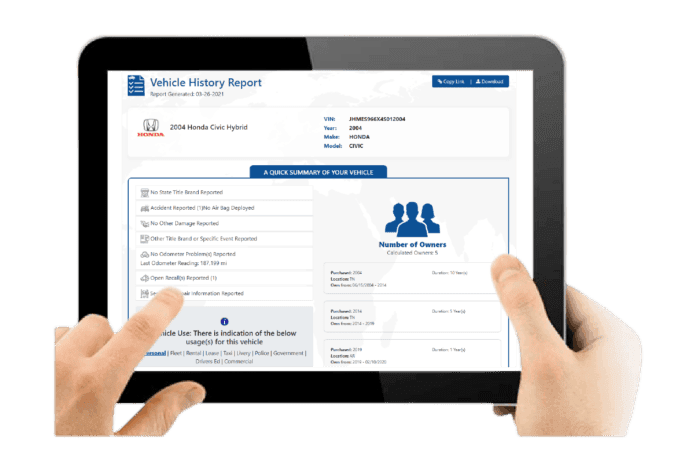
What is a Saab VIN?
A Saab VIN, or Vehicle Identification Number, is a 17-character code made up of letters and numbers. It is assigned during production and serves as the vehicle’s official identifier for registration, servicing, recalls, insurance, and ownership records.
Even if two Saab vehicles share the same model year, trim, and colour, each VIN is unique. The VIN confirms the original factory configuration, including engine type such as turbocharged inline-four variants commonly found in models like the 9-3 and 9-5, transmission type (manual or automatic), drivetrain layout such as FWD or AWD (XWD on certain models), model year, production plant, and the vehicle’s individual serial number.
What Information Can You See with a Saab VIN?
Using our free Saab VIN Decoder, you can verify available factory information about your vehicle.
Model Year
Confirm the Saab's production year to identify the correct generation and model before purchasing, servicing, registering, or restoring the vehicle.
Factory Trim
Verify the original trim and model configuration when available. Saab offered different equipment and performance configurations across model generations and markets.
Engine
Identify the original factory-installed engine when available, including Saab's turbocharged four-cylinder, V6, and other supported powertrain configurations.
Transmission
Verify the original factory transmission, including available manual and automatic transmissions depending on the Saab model and production year.
Drivetrain
Confirm the original drivetrain configuration, including front-wheel drive (FWD) and available all-wheel-drive (AWD) systems on supported models.
Body Style
Identify the original body configuration, such as sedan, hatchback, wagon, convertible, or coupe, depending on the model.
Manufacturing Information
Identify available information about where your Saab was manufactured and its original production details.
Original MSRP
Review the manufacturer's original suggested retail price when pricing information is available.
Estimated Market Value
Compare the Saab's decoded specifications with available market information to better understand its current value.
Where to Find the VIN on a Saab?
Locating the VIN on a Saab is straightforward. It appears in several places on the vehicle itself as well as on official documentation.
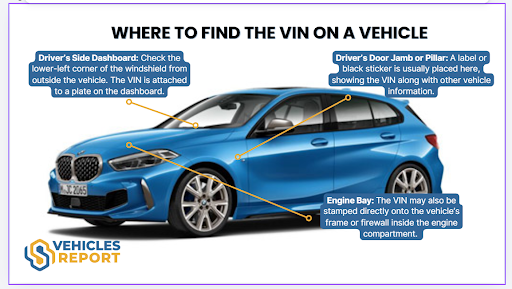
On the Vehicle’s Body
Check the following areas:
- Dashboard: Positioned at the lower corner of the windshield on the driver’s side, visible from outside the vehicle.
- Driver’s Door Jamb: Displayed on a certification label or metal plate inside the driver’s side door frame.
- Engine Bay or Firewall: Stamped onto a metal surface within the engine compartment, depending on the model year.
On the Vehicle’s Paperworks
If you do not have physical access to the Saab vehicle, you can find the Saab VIN on the:
- Vehicle Insurance Card: Check your physical insurance card, digital app, or policy declaration pages.
- Vehicle Title: Look at the state-issued title certificate for the car.
- Registration Documents: Check active or expired vehicle registration renewal forms.
- Service Records: Look at past maintenance receipts, repair invoices, or dealership service history logs.
- Loan Documents: Check your auto financing contract or lienholder statements if you have a car loan.
How to Decode a Saab VIN Number?
Decoding a Saab VIN number is easy; you can use our service to see the vehicle history report. Follow these simple steps to get it done easily.
Find the VIN
Check on the driver’s side doorjamb or on the paperwork, like the bill of sale.
Fill Out the Form
Click on the form, then write down the VIN. Click on the button to submit the form.
Review Factory Specifications
Review available information about the Saab's model, year, engine, transmission, drivetrain, body style, manufacturing details, and factory equipment.
Find the VIN
Check on the driver’s side doorjamb or on the paperwork, like the bill of sale.
Fill Out the Form
Click on the form, then write down the VIN. Click on the button to submit the form.
Review Factory Specifications
Review available information about the Saab's model, year, engine, transmission, drivetrain, body style, manufacturing details, and factory equipment.
Who Needs to Decode the Saab VIN?
Whether you are buying, selling, insuring, or servicing a Saab, decoding the VIN provides accurate factory and historical information. A detailed vehicle history report helps all parties make informed and confident decisions.
For Buyers
Decoding a Saab VIN reduces uncertainty and confirms the vehicle matches its advertised specifications and original build.
Confirm Factory Specifications
Verifies the exact model, such as 9-3, 9-5, 9-2X, or 9-7X, including turbocharged engine type, transmission, trim level, and FWD or AWD configuration.
Avoid Unexpected Issues
Review service history, accident records, title status, mileage accuracy, recall information, and lien records before completing your purchase.
How to Read the Saab VIN Number?
Every VIN is classified into three different categories: WMI, VDS, and VIS. To read a VIN, you need to understand what each characteristic represents, and this can be risky if you do not have the capacity. Check the list to know how to read a Saab VIN.
WMI (WMI (World Manufacturer Identifier))
1-3 characters: YS3
- Y = Country of origin: Sweden
- S = Manufacturer: Saab Automobile AB
- 3 = Passenger vehicle division
VDS (VDS (Vehicle Descriptor Section))
4–9 characters: ED59G7
- E = Model line: Saab 9-5
- D = Body style: Sedan
- 5 = Series or trim level
- 9 = Engine type (2.3L turbocharged inline-4)
- G = Restraint or safety system configuration
- 7 = Check digit used to validate the VIN
VIS (VIS (Vehicle Identifier Section))
10–17 characters: 73522990
- 7 = Model year: 2007
- 3 = Assembly plant: Trollhättan, Sweden
- 522990 = Sequential production number unique to the vehicle
How to Decode a Classic Saab VIN?
Saab produced many vehicles before the modern standardized VIN system became widespread. Older Saab vehicles can therefore use different VIN, chassis, or identification-number formats and can range from 5 to 14 numbers.
Our Classic Saab VIN Decoder supports many older Saab VINs and chassis numbers where records are available, helping owners and collectors research vehicles that cannot be interpreted through a standard modern VIN lookup.
What Will You Get From the Saab History Report?
A Saab history report highlights the car’s original specifications, ownership timeline, and recorded events that may affect reliability, safety systems, and long-term vehicle value.
Vehicle Specifications
This section confirms how the Saab was originally configured at the factory, including engine type, trim level, drivetrain setup, and engineering features known for the brand.
Core Vehicle Configuration
Includes turbocharged four-cylinder engine options, manual or automatic transmission, drivetrain layout such as FWD or AWD, and trims like Linear, Arc, Vector, or Aero performance variants.
Production and Pricing Details
Displays the model year, manufacturing plant, and original MSRP to help confirm factory packages, turbo performance upgrades, safety technologies, and interior equipment.
Core Vehicle Configuration
Includes turbocharged four-cylinder engine options, manual or automatic transmission, drivetrain layout such as FWD or AWD, and trims like Linear, Arc, Vector, or Aero performance variants.
Production and Pricing Details
Displays the model year, manufacturing plant, and original MSRP to help confirm factory packages, turbo performance upgrades, safety technologies, and interior equipment.
Damage Records
Damage records identify incidents that may affect the vehicle’s structure, mechanical components, or long-term reliability.
Collision and Structural Damage
Highlights accident-related repairs that may involve body panels, chassis alignment, or structural components.
Fire and Environmental Damage
Shows flood, fire, hail, or severe weather damage recorded in official reporting databases linked to the VIN.
Collision and Structural Damage
Highlights accident-related repairs that may involve body panels, chassis alignment, or structural components.
Fire and Environmental Damage
Shows flood, fire, hail, or severe weather damage recorded in official reporting databases linked to the VIN.
Accident Records
Accident history provides documented collision reports that may influence safety performance and resale value.
Accident Dates and Locations
Lists when accidents occurred and where they were officially recorded.
Structural and Safety Indicators
Highlights repair areas that may affect airbags, braking systems, traction control, or stability systems.
Accident Dates and Locations
Lists when accidents occurred and where they were officially recorded.
Structural and Safety Indicators
Highlights potential repair areas that may affect performance or safety systems.
Stolen Records
This check confirms whether the Saab has ever been reported stolen in vehicle databases.
Theft Status Verification
Confirms whether the VIN appears in national or international stolen vehicle records.
Theft Record Details
Provides reported theft dates, locations, and recovery status when available.
Theft Status Verification
Confirms whether the VIN appears in national or international stolen vehicle records.
Theft Record Details
Provides reported theft dates, locations, and recovery status when available.
Auction History
Auction history shows whether the Saab has appeared in wholesale vehicle auctions or resale markets.
Auction Sale Records
Displays auction dates, sale locations, and recorded prices when available.
Condition Reports and Photos
May include archived auction photos and vehicle condition summaries from previous listings.
Auction Sale Records
Displays auction dates, sale locations, and recorded prices when available.
Condition Reports and Photos
May include archived auction photos and vehicle condition summaries from previous listings.
Sales History
Sales records track listing activity across dealerships and resale platforms.
Listing and Sale Timeline
Shows when the Saab was listed, sold, or relisted across marketplaces.
Resale Activity Patterns
Highlights frequent resale cycles that may indicate unresolved mechanical or ownership concerns.
Listing and Sale Timeline
Shows when the Saab was listed, sold, or relisted across marketplaces.
Resale Activity Patterns
Highlights frequent resale cycles that may indicate unresolved mechanical or ownership concerns.
Service & Maintenance Records
Service history helps determine whether the Saab received consistent maintenance during its ownership.
Routine Service Documentation
Includes scheduled service visits such as oil changes, inspections, and maintenance records.
Routine Service Documentation
Includes scheduled service visits such as oil changes, inspections, and maintenance records.
Title Check
The title check confirms the vehicle’s legal status and identifies branding that may affect resale or registration.
Title Status Confirmation
Indicates whether the title is clean or carries a branded designation.
Branded Title Details
Flags salvage, rebuilt, flood-damaged, or lemon branding recorded in official title databases.
Title Status Confirmation
The title check confirms the vehicle’s legal status and identifies branding that may affect resale or registration.
Branded Title Details
Indicates whether the title is clean or carries a branded designation.
Mileage History
Mileage records help verify vehicle usage and detect irregular odometer patterns.
Recorded Odometer Entries
Displays historical mileage readings together with corresponding reporting dates.
Rollback Detection Indicators
Helps identify suspicious mileage changes or possible odometer rollback events.
Recorded Odometer Entries
Mileage records help verify vehicle usage and detect irregular odometer patterns.
Rollback Detection Indicators
Displays historical mileage readings together with corresponding reporting dates.
Lien or Loan Check
This section identifies financial claims tied to the vehicle that may affect ownership transfer.
Active Lien Status
Confirms whether a lender currently holds a legal financial interest in the vehicle.
Outstanding Loan Details
Shows unpaid balances that must be settled before completing a sale.
Active Lien Status
This section identifies financial claims tied to the vehicle that may affect ownership transfer.
Outstanding Loan Details
Confirms whether a lender currently holds a legal financial interest in the vehicle.
Ownership Records
Ownership history outlines how many individuals previously owned the Saab.
Number of Previous Owners
Indicates the total number of recorded owners linked to the VIN.
Ownership Duration and Region
Shows ownership timelines and registration regions without revealing personal information.
Number of Previous Owners
Ownership history outlines how many individuals previously owned the Saab.
Ownership Duration and Region
Indicates the total number of recorded owners linked to the VIN.
Recall Information
Recall information confirms whether Saab issued safety recalls for the vehicle.
Recall Notice Details
Lists recall dates, affected components, and reasons for manufacturer-issued safety notices.
Repair Completion Status
Confirms whether recall-related repairs were completed and properly documented.
Recall Notice Details
Recall information confirms whether Saab issued safety recalls for the vehicle.
Repair Completion Status
Lists recall dates, affected components, and reasons for manufacturer-issued safety notices.
Why You Need to Use Our Saab VIN Decoder?
Using our Saab VIN decoder service, you can get a single vehicle history report that highlights the car’s crucial information like auction records, accident history, warranty, and even the recall history for only $19.99. Here are the benefits of using our service.
Fast Process
Once you’ve submitted the form, you will get the full vehicle history report in only seconds.
24/7 Customer Support
Our customer service team is available 24/7 to ensure you get your answer quickly.
Real Auction Photos
When the vehicle was sold at an auction, you’ll get up to 10 pictures that show the vehicle’s condition when it was auctioned on the report.
Unlimited Free VIN Decoding
Run multiple Saab VIN searches to compare vehicles, verify specifications, or research classic models.
Worldwide Saab VIN Coverage
Decode supported modern and classic Saab VINs and access available factory specifications and vehicle information.
Trusted & Updated Data Sources
Our data combines DMV databases, insurance providers, Copart, IAAI, and more!
Verify the Specs on the Saab by VIN
Decode the VIN and check the car’s full specifications records.
Check Other Services
Want to get more information about the vehicle? Use our other services to confirm hidden information about the vehicle.
Saab Window Sticker Lookup
Access the vehicle’s original details, including standard features, optional packages, and more.
Saab Recall Check
A Saab Recall Check helps identify available manufacturer safety campaigns associated with the vehicle's VIN.
License Plate Lookup
No VIN? Use the license plate number to pull up the report.
Decode the Saab VIN Now
Check the Saab VIN to examine its full specifications like engine type, fuel type, drivetrain, and even the last recorded mileage. Decode the VIN to check the car’s past history.
FAQs About Saab VIN Decoder
How do I decode a Saab VIN?
Enter your Saab VIN into our free decoder. It automatically interprets available information and displays the model, year, engine, transmission, drivetrain, factory configuration, and other available specifications.
Can I check a Saab VIN for free?
Yes. Our free Saab VIN Decoder provides available factory specifications. Historical records such as accidents, titles, ownership, and mileage require a premium Vehicle History Report.
How to check a Saab vehicle history?
To review a Saab’s vehicle history, first locate the 17-character VIN on the dashboard or inside the driver’s door jamb. You can then use reputable online VIN check services to access records such as reported accidents, theft data, title history, mileage readings, and in some cases, original factory equipment details.
What is the history of the Saab car?
Saab began in 1946 as a division of the Swedish aerospace company Saab AB and introduced its first production car, the Saab 92, in 1949. The brand carried over strong aeronautical engineering principles, becoming known for safety innovations and turbocharged engines. After General Motors acquired full ownership in 2000, Saab later faced financial difficulties and filed for bankruptcy in 2011.
Were Saabs considered high-end?
Saab vehicles were positioned as premium rather than ultra-luxury models, often competing with brands like BMW and Audi from the 1980s onward. They developed a reputation for aircraft-inspired design, turbocharged performance, and advanced safety features, attracting buyers who appreciated distinctive engineering and understated sophistication.
Is Saab the same as Scania?
Saab and Scania are separate companies today, although they operated together as Saab-Scania AB from 1969 until 1995. After the split, Scania concentrated on heavy trucks and buses, while Saab continued in the aerospace and defence sector following the closure of its automobile manufacturing operations.