
Check a Utah License Plate Before You Buy
Looking to check a Utah license plate before buying a vehicle? Our Utah license plate lookup service connects the plate number to the vehicle’s recorded data and delivers a complete history report in minutes. Avoid hidden accidents, unpaid liens, title brands, and mileage fraud. Verify first. Decide with confidence.
Why Use Our Utah License Plate Lookup Service
Utah’s climate, high-altitude terrain, and growing vehicle market make it important to verify any vehicle before purchase. Running a Utah license plate lookup is similar to performing a VIN check, but more convenient when only the plate number is available. It reduces financial risk and protects you from legal complications.
Below are key data points that show why running a Utah license plate report matters.
286
In 2023, Utah had a motor vehicle theft rate of 286 per 100,000 residents.
281
Preliminary data for 2024 indicates 281 traffic fatalities, up from 279 in 2023.
100,000+
Utah continues to grow, adding over 100,000 new residents each year, which boosts used vehicle transactions.
Who Should Use the Utah License Plate Lookup Tool?
A Utah license plate lookup is helpful for anyone involved in a vehicle transaction. Whether you are buying your first car, managing a dealership, or selling privately, having verified information strengthens your position and reduces risk.
Buyers
If you are purchasing a used vehicle in Utah, running a plate search gives clarity before you sign paperwork or transfer money. It allows you to see the vehicle’s background in one organized report.
Confirm title status
You will see if the vehicle carries a salvage, rebuilt, flood, or other branded title that affects safety and resale value.
Examine registration history
You will see where the vehicle was previously registered, including movements inside or outside Utah.
What You Can Discover from a Utah License Plate Lookup
A Utah license plate lookup from Vehicles Report will provide structured and verified information connected to that plate number. Even if you only have the plate and not the VIN, our system will decode the associated VIN and deliver organized data about specifications, title history, ownership, accidents, mileage, and more.
Vehicle Specifications
This section confirms the vehicle’s identity. The Utah license plate lookup will decode technical details and verify that the car matches what is being advertised.
Associated VIN Number
Your report reveals the VIN linked to the Utah license plate, allowing you to confirm the vehicle’s manufacturer, production year, and factory specifications before making a purchase.
Year, Make, Model
You will see the exact manufacturing year, brand, and model.
Trim Level
The trim version will be identified to confirm factory configuration.
Engine Specifications
Details such as engine size, cylinders, and fuel type will be listed.
Ownership History
Ownership history helps buyers understand how the vehicle has been used and transferred throughout its lifetime. The Utah license plate lookup report will present previous ownership records and registration events linked to the vehicle.
Owner Count
The owner count section shows the number of recorded previous owners connected to the vehicle.
Ownership Timeline
The ownership timeline shows when each transfer occurred and how long each owner kept the vehicle. Short ownership periods may indicate recurring mechanical issues or frequent resale attempts.
Registration Locations
This section lists the states where the vehicle was registered during its lifetime. It helps identify if the vehicle moved between regions with different climates or environmental conditions.
Vehicle Use
The vehicle use section explains how the vehicle was primarily used during its registration history. Different usage types affect wear levels, mileage accumulation, and maintenance schedules.
Personal Use
Vehicles used primarily for personal transportation usually experience moderate annual mileage and predictable maintenance schedules. These vehicles often show fewer mechanical stresses compared to commercial fleet vehicles.
Commercial Use
Commercial vehicles typically accumulate mileage faster because they are used for work purposes such as deliveries, transportation services, or business operations that require frequent driving.
Rental History
Rental vehicles experience high driver turnover and frequent daily usage. While rental companies maintain vehicles regularly, the usage pattern can increase wear compared with privately owned vehicles.
Mileage History
Mileage history reveals how heavily a vehicle has been used over time and helps identify suspicious odometer changes. The Utah license plate lookup report will organize recorded odometer readings from inspections, service visits, auctions, and registration updates.
Mileage History from Multiple Sources
Mileage data will be collected from inspection stations, service facilities, auctions, and other verified reporting channels. This helps create a timeline showing how the odometer reading changed over time.
Rollback Detection and Alerts
If mileage records decrease between reporting periods, the system will flag potential odometer rollback activity. Odometer manipulation is illegal and can significantly inflate a vehicle’s market value.
Annual Usage Patterns
The report will estimate yearly mileage trends to show whether the vehicle was used moderately or driven extensively during specific ownership periods.
Lien / Loan Check
The lien check section verifies whether financial institutions have active loan claims attached to the vehicle. This information is critical because outstanding liens can legally prevent ownership transfer.
Lien Record Identification
The report will identify whether a bank, credit union, or financing company has recorded a lien against the vehicle title.
Dates and Locations
Lien filing dates and the state where the lien was recorded will appear in the report, helping buyers understand the timing and jurisdiction of the financial claim.
Verified Sources
Lien records will be compiled from trusted reporting databases and financial record sources that track vehicle financing agreements and loan registrations.
Accident Records
Accident records reveal whether the vehicle has been involved in reported collisions during its lifetime. This information helps buyers evaluate potential structural or safety concerns.
Number of Accidents Reported
The report will show the total number of accidents associated with the vehicle according to available records from insurance reports and other reporting channels.
Date of Reported Accidents
Each accident record will include the reported date of the incident, helping users understand when the damage occurred in relation to ownership changes.
Reported Accident Location
When available, accident records will include the city or state where the incident occurred, providing additional context about environmental and traffic conditions.
Damage History
Damage history provides insight into the physical condition of the vehicle beyond standard accident reports. Some damage may be recorded through insurance claims, repair shops, or inspection events.
Fire Damage
Fire damage records indicate that the vehicle experienced heat or flame exposure that required repair or insurance claim processing.
Flood Damage
Flood damage can affect electrical systems, wiring harnesses, interior materials, and safety components. These records help buyers understand potential long-term reliability risks.
Hail Damage
Hailstorms can create significant cosmetic damage to body panels and glass. These incidents are occasionally reported through insurance claims.
Title Check
The title check section verifies whether the vehicle has received any branded titles during its lifetime. Title brands are official designations issued by state agencies when a vehicle experiences severe damage, insurance total loss, or manufacturer buyback events.
Salvage
A salvage title indicates that an insurance company previously declared the vehicle a total loss due to significant damage, like frame damage or airbag deployment history. This could involve accidents, flooding, fire, or other severe incidents that exceeded repair value.
Rebuilt
A rebuilt title appears when a salvage vehicle has been repaired and inspected before returning to road use. The report will identify this history so buyers understand that the vehicle experienced major damage in the past.
Lemon
A lemon title may appear when a manufacturer repurchased a vehicle due to repeated mechanical defects or warranty problems that could not be repaired after multiple attempts.
Recalls Check
Vehicle safety recalls are issued by manufacturers and safety regulators when defects are discovered that could affect safety or compliance standards.
Open Recall Information
The report will list open recall campaigns that still require repair by the manufacturer or dealership service department.
Completed Recall Events
Completed recall records confirm that a previously issued safety recall was repaired and resolved by an authorized service center.
Manufacturer and Safety Agency Notices
Safety notices from manufacturers or regulatory agencies will appear in the report when they are connected to the vehicle model or VIN.
Theft Records
The theft records section helps buyers avoid purchasing a vehicle connected to criminal activity or unresolved theft investigations.
Stolen Status Check
The system will check national and state theft databases to determine whether the vehicle is currently listed as stolen.
Recorded Theft Incidents
Past theft events, recoveries, or police reports connected to the vehicle will appear when those records are available in reporting databases.
Service & Maintenance Records
Maintenance history helps buyers understand how consistently the vehicle was serviced throughout its life.
Scheduled Maintenance
Routine maintenance entries, such as oil changes, tire rotations, and inspections, will appear when they are reported by participating service facilities.
Part Replacements
Replacement records for parts such as batteries, brake components, or filters help illustrate how the vehicle was maintained over time.
Inspection Notes
Inspection remarks recorded during service visits may include technician observations about the vehicle’s condition or recommended repairs.
Auction History
Auction history can reveal when the vehicle was sold through wholesale markets or dealer auctions before reaching its current owner.
Auction Date and Location
The report will display the auction date and facility location where the vehicle was listed for sale.
Sale Price
Auction sale prices provide useful insight into the vehicle’s past market value.
Condition Notes
Auction inspection reports often include notes about damage or mechanical condition at the time of sale.
Engine Start Status
Auction reports sometimes indicate whether the engine started or ran during inspection.
Number of Photos
Photo counts recorded during auctions provide additional documentation about the vehicle’s condition during the sale.
How Our License Plate Lookup Works
Using our Utah license plate lookup tool is simple and secure.
Locate the Utah license plate number
Find the complete plate number on the vehicle or registration document.
Fill in the Form
Enter the plate number and select Utah from the state dropdown menu.
Access Your Full Vehicle History Report
Within minutes, your full Utah license plate report will be ready for review.
Supported Utah Vehicle Types
Our system supports a wide range of Utah vehicles.
Cars
Sedans, hatchbacks, and coupes registered in Utah.
SUVs
Compact to full-size sport utility vehicles are commonly used in Utah’s varied terrain.
RV and Motorhomes
Recreational vehicles are used for travel and camping.
Motorcycles
Street bikes, cruisers, and touring motorcycles.
Trucks
Light-duty and heavy-duty pickup trucks.
ATV
All-terrain vehicles registered for permitted use.
Guide to Utah License Plates
Utah license plates are issued and regulated by the Utah Division of Motor Vehicles (Utah DMV). These plates identify a registered vehicle and confirm that it has been legally titled and registered in the state.
Types of Utah License Plates
Most vehicles in Utah require two license plates, one on the front and one on the rear, although some exceptions apply depending on vehicle type. Utah is also known for its famous plate slogan, “Greatest Snow on Earth.”
Standard Passenger Plates
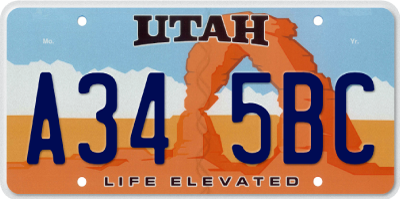
Sample: A345BC Issued to most privately owned cars and trucks registered in Utah.
Black Historical Plate
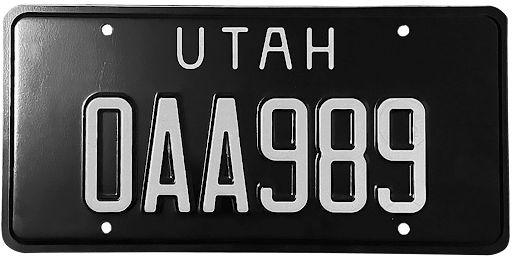
Sample: 0AA989 A black background design inspired by Utah’s vintage license plates.
In God We Trust Plate
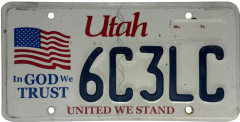
Sample: 6C3LC A specialty plate displaying the national motto on the design.
Utah Greatest Snow on Earth Plate
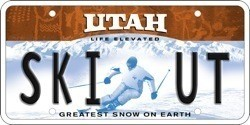
Sample: SKIUT The most common design features Delicate Arch and the famous slogan.
Disabled Plates
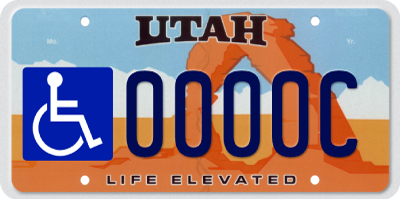
Sample: 0000C Issued to qualified individuals with service-connected disabilities.
Special Group Plates
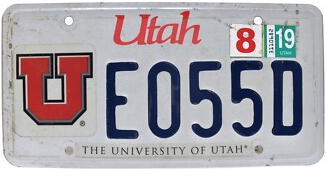
Sample: E055D Plates supporting charities, universities, or organizations.
Utah Titling & Registration Overview
Sample: SKIUT
Utah License Plate Renewal Options
The most common design features Delicate Arch and the famous slogan.
Requirement | Details | Official Form / Authority | Additional Notes |
|---|---|---|---|
Vehicle Title Application | Required when registering a newly purchased or transferred vehicle. | Utah DMV Title Application | Must include owner information and vehicle details. |
VProof of Ownership | Previous title or bill of sale confirming transfer of ownership. | Utah DMV | Required for both new and used vehicles. |
Identification | Valid driver’s license or government identification. | Utah DMV | Confirms the legal identity of the owner. |
Registration Fees | Fees vary based on vehicle type, weight, and age. | Utah DMV Fee Schedule | Must be paid before plates are issued. |
Safety & Emissions Requirements | Some counties require emissions inspections. | Utah Department of Environmental Quality | Applies mainly to populated counties. |
Utah Replacement & Temporary Plates
Sample: 0000C
Issued to qualified individuals with service-connected disabilities.
Sample: E055D
Plates supporting charities, universities, or organizations.
Before a vehicle can legally display a Utah license plate, it must first be titled and registered through the Utah DMV. This process confirms vehicle ownership, ensures taxes are paid, and verifies that the vehicle meets state requirements.
Utah drivers must renew their vehicle registration and license plates periodically to maintain legal road use. The Utah DMV offers several convenient renewal methods depending on eligibility.
If a Utah license plate becomes damaged, lost, or stolen, drivers must request a replacement through the Utah DMV. Temporary permits are also issued when vehicles are newly purchased or awaiting permanent registration.
Renewal Method | Eligibility | Required Documents | Additional Notes |
|---|---|---|---|
Online Renewal | Available for most vehicles with active registrations. | Plate number and renewal notice. | Fastest and most convenient method. |
By Mail | Drivers who receive a renewal notice may renew by mail. | Renewal notice and payment. | Processing may take longer than online renewal. |
In Person | Available at Utah DMV offices. | Identification and vehicle details. | Useful for complex registrations. |
Self-Service Kiosk | Available in select locations across Utah. | Plate number and payment method. | Offers quick automated renewal services. |
Explore Other than Utah License Plate Search Tools
If you want more information beyond a Utah license plate lookup, Vehicles Report offers additional vehicle data tools. These tools help verify vehicle specifications, original factory features, and manufacturing details.
Window Sticker
A window sticker, also called a Monroney label, shows the original factory information for a vehicle. It includes MSRP price, installed options, fuel economy ratings, safety features, and equipment packages.
VIN Decoder
Our VIN Decoder translates a vehicle identification number into detailed specifications for modern 17-character VINs and vintage vehicles with shorter VINs (5 to 14 characters), ensuring accurate identification.
Looking for License Plate Information in Another State?
Vehicle history checks are not limited to Utah. If you are researching a vehicle registered in another state, the Vehicles Report allows you to run license plate lookups across the United States. Simply select the correct state and start your search.
FAQs about Utah License Plate Lookup
Can someone look you up by license plate?
No. Personal details such as the owner’s name, home address, or contact information are protected under the Driver’s Privacy Protection Act (DPPA).
However, with our Utah license plate lookup using Vehicles Report, you can access vehicle-related information linked to the plate. This includes accident records, title status, mileage history, recalls, and other vehicle history data that help buyers make informed decisions.
Is a license plate considered public record?
A license plate number itself is visible in public and used for vehicle identification. However, the personal information connected to the plate is restricted by federal privacy law.
A Utah license plate search through Vehicles Report will provide vehicle data such as specifications, title records, accidents, and mileage history without exposing the vehicle owner’s private information.
How many different Utah license plates are there?
Utah offers dozens of license plate designs, including standard plates, black historical plates, specialty organization plates, and personalized plates. The Utah DMV regularly releases new designs supporting universities, charities, and public programs.
A Utah license plate lookup can help identify the vehicle connected to any of these plate types.
Is running a license plate search legal?
Yes, running a Utah license plate lookup is legal when used for lawful purposes such as verifying a vehicle before buying, selling, or transferring ownership. Our service complies with federal privacy regulations and only provides vehicle-related information without revealing personal identity data.
Can I find the owner of a license plate in Utah?
No. Federal law under the Driver’s Privacy Protection Act (DPPA) prevents public access to personal owner information linked to license plates. Instead, a Utah license plate lookup with Vehicles Report focuses on vehicle records such as accident history, title brands, mileage reports, and recall data.
Can I check plates from car dealerships before buying?
Yes. Running a Utah license plate lookup before purchasing from a dealership is a smart step. It helps confirm the vehicle’s accident history, title status, and mileage records before completing the purchase.
This extra verification can protect buyers from hidden damage or inaccurate listings.
What is unique about Utah license plates?
Utah license plates are well known for the slogan “Greatest Snow on Earth” and the image of Delicate Arch, a famous rock formation located in Arches National Park. The state also offers unique designs, such as the black historical plate, which has become popular among Utah drivers in recent years.
Does Utah have two license plates?
Yes. Most passenger vehicles registered in Utah are required to display two license plates, one on the front and one on the rear. However, certain vehicles, such as motorcycles or trailers, may only require a single plate depending on their registration category.
Can I search plates by city, like Salt Lake City or Provo?
No. License plate lookups are performed using the plate number and state of registration, not by city or county. To check a vehicle registered anywhere in Utah, simply enter the plate number and select Utah in the Vehicles Report lookup tool.
Can I track a car by license plate?
A Utah license plate lookup cannot be used to track a vehicle’s real-time location. Tracking vehicles without authorization would violate privacy and surveillance laws. Instead, our lookup service provides historical vehicle data such as accidents, ownership records, title information, and mileage history.
Can I run a Utah license plate lookup anonymously?
Yes. A plate search through the Vehicles Report is confidential. The vehicle owner will not receive any notification when someone performs a lookup on their vehicle’s license plate. This allows buyers to verify vehicle details privately before contacting a seller.