
Texas License Plate Lookup – Reveal Hidden Records Instantly
Buying or selling a vehicle in Texas without checking its background can be risky. Our Texas license plate lookup tool connects a license plate to detailed vehicle history records, providing crucial information like recorded accident data, title brands, and mileage verification before making a financial decision.
Why Use Our Texas License Plate Lookup Service
Texas has one of the largest used vehicle markets in the U.S. Hurricanes, hailstorms, flooding, and high transaction volume increase the risk of hidden damage and title issues. Running a plate lookup helps reduce financial and legal exposure.
Below are important, data-backed reasons why running a Texas license plate lookup matters.
105,015
According to the Texas Department of Public Safety, over 105,000 motor vehicles were reported stolen in Texas in 2023.
4,283
The Texas Department of Transportation reported 4,283 traffic fatalities in 2023. Serious crashes often lead to structural damage that is not always visible.
800,000+
Texas regularly experiences hurricanes, hailstorms, and flash flooding. Insurance industry reports estimate hundreds of thousands of vehicles nationwide are affected by weather events each year.
Who Should Use the Texas License Plate Lookup Tool?
A Texas license plate lookup is valuable for individuals and businesses who want transparency before transferring ownership. Whether you are purchasing your first car or managing a dealership, accurate data reduces uncertainty and builds trust.
Buyers
If you are shopping for a used vehicle in Texas, you should never rely only on the seller’s word. A Texas license plate search helps confirm the vehicle’s history and protects your investment before signing any agreement.
Confirm mileage accuracy
Compare recorded odometer readings across years to detect inconsistencies or possible rollback attempts.
Review past ownership
Understand how many previous owners the vehicle had and how frequently it changed hands.
What You Can Discover from a Texas License Plate Lookup
A Texas license plate lookup will unlock a full vehicle history report connected to the VIN. Even if you know nothing about Texas license plates or vehicle decoding, the report will clearly explain each section in simple language. You will see structured data that supports confident decisions and reduces financial risk.
Vehicle Specifications
This section confirms the vehicle’s original factory configuration using data linked to the Texas license plate and VIN. It verifies identity details so you know exactly what vehicle you are reviewing before making a purchase decision.
Year, Make, Model
Displays the official production year, manufacturer brand, and exact model designation recorded in Texas registration and national manufacturing databases.
Trim Level
Identifies the specific trim package, including upgraded features, technology options, interior materials, and performance variations installed by the manufacturer.
Engine Specifications
Lists engine size, cylinder layout, fuel type, and horsepower ratings to confirm the mechanical configuration matches the seller’s description.
Title Check
The title section in your Texas license plate lookup reveals important legal branding information that affects value, insurability, and resale eligibility.
Lemon
Identifies vehicles repurchased by manufacturers because of repeated mechanical defects or unresolved warranty-related issues.
Junk
Confirms the vehicle was officially categorized as non-repairable and not legally eligible for highway operation.
Flood Brand
Highlights official flood-related title branding recorded in Texas or other states after water damage claims.
Ownership History
Ownership history provides insight into how frequently the vehicle changed hands and how long each owner retained it.
Owner Count
Displays the total number of previous registered owners associated with the vehicle.
Ownership Timeline
Outlines the start and end dates of each ownership period for stability evaluation.
Registration Locations
Lists states and Texas counties where the vehicle was registered over time.
Vehicle Use Type
Understanding prior use helps evaluate wear, maintenance demands, and long-term durability.
Personal Use
Indicates the vehicle was privately owned for daily commuting or family transportation.
Commercial Use
Reveals business-related usage such as service vehicles or delivery operations.
Taxi or Rideshare Use
Highlights high-mileage commercial passenger transportation, including taxi or rideshare activity.
Mileage History
Mileage records play a major role in determining value and mechanical reliability.
Mileage History from Multiple Sources
Compiles odometer readings from inspections, service visits, title transfers, and registration renewals.
Rollback Detection and Alerts
Flags potential odometer inconsistencies that suggest tampering or reporting errors.
Service & Maintenance Records
Maintenance documentation reflects how responsibly the vehicle was cared for.
Scheduled Maintenance
Shows routine services such as oil changes and inspections.
Part Replacements
Lists replaced components including brakes, batteries, or suspension parts.
Notes from Inspections
Displays technician comments recorded during service visits.
Auction History
Auction records reveal pricing and condition changes over time.
Auction Date and Location
Specifies when and where the vehicle appeared at auction.
Sale Price
Displays recorded selling prices from auction transactions.
Condition Notes
Includes listed primary and secondary damage descriptions.
Sales History
Sales history reflects how often and how the vehicle was marketed.
Condition at Each Listing
Shows seller descriptions of condition during each listing period.
Photos from Past Listings
Provides archived images to compare cosmetic or structural changes over time.
Recalls Check
Recall verification ensures compliance with manufacturer safety standards.
Open Recall Information
Lists active recalls that require repair by an authorized dealer.
Completed Recall Events
Shows recalls that were already repaired according to manufacturer records.
Manufacturer and Safety Agency Notices
Displays official recall notices issued by manufacturers or safety authorities.
Theft Records
Theft verification protects buyers from legal and financial complications.
Stolen Status Check
Confirms whether the vehicle is currently listed as stolen.
Recorded Theft Incidents
Lists previous theft reports associated with the vehicle.
Recovery Status
Indicates whether the vehicle was recovered after a theft report.
Lien/Loan Check
This section ensures there are no unresolved financial obligations attached to the vehicle.
Lien Record Identification
Shows whether a financial institution has an active legal claim on the vehicle.
Dates and Locations
Lists when the lien was recorded and the jurisdiction where it was filed.
Verified Sources
Vehicle history data is compiled from industry reporting systems, auction databases, insurance records, and motor vehicle agency filings, where available.
Release Status
Indicates whether the recorded lien was satisfied or remains active and unresolved.
Accident Records
Accident transparency is essential for evaluating safety and structural integrity.
Number of Accidents Reported
Lists the total number of documented collision incidents associated with the vehicle.
Date of Reported Accidents
Provides chronological information for each recorded accident event.
Reported Accident Location
Identifies the city or state where reported accidents occurred.
Severity Indicators
Shows whether airbags deployed or structural damage was officially recorded.
How Our License Plate Lookup Works
Our process is simple, secure, and fast. Follow these simple steps below:
Locate the Texas license plate number
Find the full alphanumeric Texas license plate displayed on the vehicle.
Fill in the Form
Enter the plate number and select Texas from the state dropdown menu.
Access Your Full Vehicle History Report
Our system connects the Texas license plate to its VIN and generates your complete report within seconds.
Supported Texas Vehicle Types
We support a wide range of registered Texas vehicles, including the following categories:
Cars
From compact sedans to luxury vehicles, our Texas license plate lookup covers personal passenger cars registered across the state.
SUVs
From small crossovers to full-size sport utility vehicles, our system covers SUVs commonly driven across Texas.
Vintage Vehicles
We support classic and vintage Texas vehicles, including older models, where historical data exists.
Motorcycles
Decode motorcycle plate numbers and review available history records linked to Texas registration data.
Trucks
Light-duty and heavy-duty pickup trucks commonly used in Texas industries are supported.
RV and Motorhomes
Recreational vehicles and motorhomes registered in Texas are also included.
Guide to Texas License Plates
Texas license plates are issued by the Texas Department of Motor Vehicles (TxDMV). The plate shows that a vehicle is properly registered and legally allowed to operate on public roads. Understanding plate types, renewal rules, and replacement options helps you stay compliant and avoid penalties. This guide explains the basics in a simple and practical way.
Types of Texas License plate
Texas offers several plate designs depending on vehicle type and owner preference. Most vehicles display a rear plate only, except for certain commercial or specialty registrations. Below are some common Texas license plate types.
Standard Passenger Plates
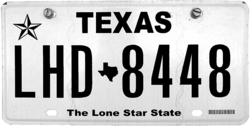
Sample: LHD8448
Issued to most privately owned cars in Texas.
Specialty Plates
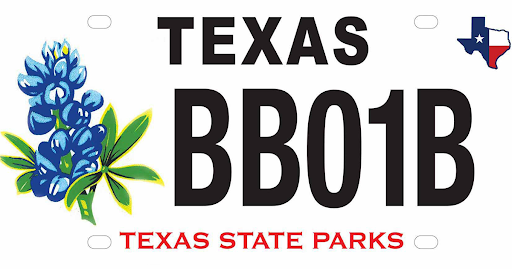
Sample: BB01B
Support universities, charities, the military, and causes.
Disabled Plates

Sample: 3TK BD
Issued to qualifying people with needs with documentation.
Antique Plates
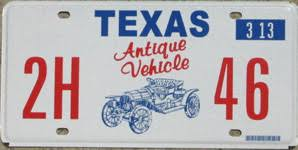
Sample: 2H46
For classic vehicles used for exhibitions or limited driving.
Commercial Plates
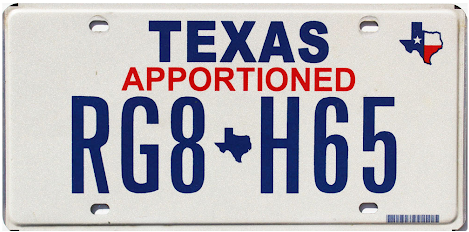
Sample: RG8H65
Assigned to business-registered vehicles and trucks.
Temporary Tags
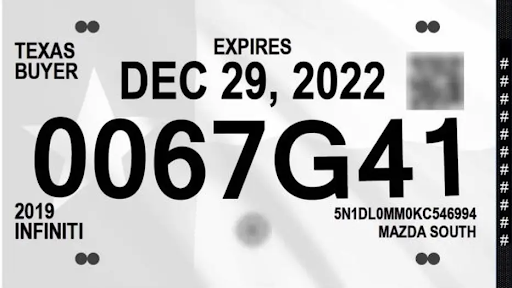
Sample: 0067G41
Short-term paper plates for new purchases.
Texas Titling & Registration Overview
When you buy or move a vehicle into Texas, you must complete titling and registration through the TxDMV and your local county tax office. This process legally links the vehicle to the owner and assigns or transfers a Texas license plate.
Texas License Plate Renewal Options
Texas vehicle registration must be renewed annually. Drivers can complete renewal before expiration to avoid penalties. The TxDMV and county offices manage renewal processing.
Requirement | Details |
|---|---|
Vehicle Title Application | Required when transferring ownership |
Proof of Insurance | Must meet Texas minimum liability requirements |
Vehicle Inspection | Safety inspection required before registration |
Payment of Fees | Registration and title fees vary by county |
Official Form / Authority | Texas Department of Motor Vehicles (TxDMV) |
Additional Notes | New residents must title within 30 days |
Texas Replacement & Temporary Plates
If your Texas license plate is lost, stolen, or damaged, you must request a replacement through your local county tax office. Temporary tags are also issued for short-term use.
Fees and policies are subject to updates by the Texas Department of Motor Vehicles.
Renewal Method | Eligibility | Required Documents | Additional Notes |
|---|---|---|---|
Online | Most passenger vehicles | Renewal notice, insurance | Fastest option |
By Mail | Eligible renewal cases | Renewal form, payment | Allow mailing time |
In Person | All vehicle types | ID, insurance, inspection | Visit the county tax office |
Explore Other than Texas License Plate Search Tools
If you need more than a Texas license plate lookup, see other Texas vehicle tools below. These tools give deeper insights into factory details and original configurations.
Window Sticker
A window sticker, also called the Monroney label, shows the vehicle’s original MSRP, factory options, fuel economy ratings, and safety features.
VIN Decoder
Our VIN Decoder quickly reveals specifications and manufacturing details from a 17-character VIN. We also decode classic pre-1980 vehicles with 5 to 14-digit VINs, making it ideal for Texas antique car owners.
Looking for License Plate Information in Another State?
Many vehicles move across state lines. Our platform allows you to check license plate records beyond Texas with confidence.
FAQs about Texas License Plate Lookup
Can you look up a Texas license plate owner?
No, you cannot access personal owner information. Texas follows the federal Driver’s Privacy Protection Act, which protects private data. However, our Texas license plate lookup allows you to access vehicle history details such as accidents, title brands, mileage, and recalls without revealing personal identity.
Is it legal to look up license plates in Texas?
Yes, it is legal when used for lawful purposes such as vehicle verification. You must not attempt to obtain protected personal information. Our Texas license plate lookup tool complies with federal privacy laws and only provides vehicle history records.
Can you look up a license plate for free?
Yes, you can enter a Texas license plate number and access basic vehicle specifications at no cost. However, detailed records such as accident history, title brands, lien checks, and mileage logs require a full vehicle history report.
What happens if you look up a license plate?
When you perform a license plate lookup, the system connects the plate to the vehicle’s VIN and retrieves recorded data such as accident reports, title brands, mileage history, and recalls. The registered owner is not notified during a standard vehicle history search.
Should I be worried if someone takes a picture of my license plate?
Generally, no. License plates are displayed publicly on vehicles. However, misuse of personal data is illegal. Your private information remains protected under federal law, even if someone sees or photographs your plate.
Why would someone look up a license plate?
Most people run a Texas license plate lookup before buying a used vehicle. It helps verify accident history, title condition, mileage records, and possible liens. It is a protective step before making a financial decision.