
New York License Plate Lookup – Get Complete Vehicle History Report
Enter a New York license plate number to instantly access the VIN, title status, accident records, mileage history, lien indicators, and recall data. Make confident decisions in seconds, not after costly mistakes.
Why Use Our New York License Plate Lookup Service
In New York’s fast-moving used car market, a New York license plate lookup is a protective step, not an optional one. With rising vehicle theft and title fraud risks, verifying the plate before payment helps prevent legal and financial complications. Here are data-backed reasons drivers use our service.
38,620
In 2023, New York State recorded 38,620 motor vehicle thefts.
+43%
From 2022 to 2023, New York State motor vehicle theft increased by 43%. Fast changes like this often create more “too good to be true” deals and more pressure to decide quickly.
70,000
Based on insurance-claim estimates shared by New York State environmental officials, New York sees over 70,000 deer-vehicle collisions each year.
Who Should Use the New York License Plate Lookup Tool?
A New York license plate lookup is built for real-life decisions. Whether you are buying your first car in the U.S. or managing multiple vehicles, plate-based checks help you confirm the vehicle’s record quickly, using the plate number you can see on the car.
Buyers
Buying used in New York moves fast, and pressure can lead to expensive mistakes. A license plate lookup helps you slow down and verify the vehicle’s background, so you can choose with confidence instead of hope.
Check title brands that change resale value
If a car has salvage, rebuilt, or similar branding, the value and insurability can change immediately. You will see those signals clearly.
See ownership patterns that suggest risk
Frequent ownership changes can be normal, but they can also signal ongoing problems. The report gives you context before you decide.
What You Can Discover from a New York License Plate Lookup
A Vehicles Report New York license plate lookup will turn a plate number into a practical, easy-to-read history report. If you are new to the U.S. car market, this is the simplest way to understand what a vehicle has been through, what it is worth, and what it could cost you later.
Vehicle Specifications
Your report starts by confirming what the vehicle is, not just what the seller says it is. You will see core identity and build details in one place, so you can compare them to the listing and to the vehicle in front of you.
Associated VIN number
A license plate lookup links the plate to the associated VIN, helping you confirm the vehicle identity behind the plate and reducing the risk of mismatched paperwork.
Year, Make, Model
You will see the vehicle’s year, make, and model clearly presented so you can confirm you are researching the correct car.
Trim
Trim level matters for pricing because it affects equipment and value. The report shows trim details to help you compare fairly.
Lien/Loan check
Financial interests can create major headaches after purchase. This section helps you confirm whether lien or loan indicators appear in the vehicle record.
Lien Record Identification
The report will show lien-related indicators when available, helping you avoid buying a vehicle that cannot transfer cleanly.
Dates and Locations
When the record includes timing or location context, it helps you understand whether a lien appears current or tied to older events.
Verified Sources
The goal is clarity: the report organizes the information so you can make a decision without guessing.
Accident Records
Accidents can affect safety, alignment, and long-term reliability. This section helps you understand what has been recorded and what it means.
Date of Reported Accidents
Timing matters because recent accidents may involve active repairs or unresolved issues. The report organizes events by date.
Reported Accident Location
Location context helps you understand where an incident was recorded and supports smarter follow-up questions.
Severity and follow-up indicators
When the record contains signals related to severity or related events, you’ll see severity indicators clearly explained.
Damage History
Not every damage event is a “big crash.” Sometimes the expensive problems are water, fire, or repeated cosmetic repairs that hint at harsher life conditions.
Fire Damage
Fire-related history is a serious safety and reliability issue. The report will highlight it clearly when recorded.
Hail Damage
Hail events can affect panels and paint quality. The report helps you understand if recorded hail damage exists.
Structural and repair-related signals
When the record reflects deeper damage indicators, this section helps you spot them before you buy.
Recalls Check
Recalls can involve airbags, brakes, fuel systems, and other safety-critical parts. This section helps you know what must be fixed.
Open Recall Information
You will see open recall status when available, so you know what safety actions are still needed.
Completed Recall Events
When completed recall activity is recorded, it helps you understand what has already been addressed.
Manufacturer and Safety Agency Notices
The report summarizes notices in a practical way so you can plan next steps.
Ownership History
Ownership patterns matter because they can reveal how stable a vehicle’s past has been. This section helps you understand how the vehicle moved through the market over time.
Owner Count
You will see how many owners are associated with the vehicle record, which helps you judge stability and potential wear patterns.
Ownership Timeline
A timeline view helps you understand when ownership changed and whether changes happened unusually often for a normal personal vehicle.
Registration Locations
Registration locations help you understand where the vehicle spent time, which can be useful for evaluating use conditions and market history.
Vehicle Use Type
How a vehicle was used affects wear. A taxi or fleet vehicle can be perfectly maintained, but the usage style is different from that of a weekend family car.
Personally
Personal-use history can suggest more predictable driving patterns, especially when ownership stays consistent over time.
Commercially
Commercial use can mean heavier daily driving, which affects mileage and wear. The report helps you recognize that context early.
Mileage History
Mileage is one of the biggest pricing drivers, and it is also one of the easiest areas for fraud. NHTSA warns that false odometer readings affect hundreds of thousands of vehicles sold each year.
Mileage History from Multiple Sources
You will see mileage readings from recorded sources over time, which helps you evaluate consistency and spot suspicious drops.
Rollback Detection and Alerts
If the pattern suggests rollback or inconsistencies, the report highlights it so you can avoid overpaying.
Annual Usage Patterns
Understanding yearly mileage trends helps you judge whether “low mileage” makes sense for the vehicle’s age and ownership story.
Theft Records
With New York’s theft volume and a statewide theft rate in the hundreds per 100,000 residents, theft screening is not optional for careful buyers.
Stolen Status Check
The report checks for stolen-status signals where available, helping you avoid buying a vehicle with serious legal risk.
Recorded Theft Incidents
If theft-related incidents appear in the record, they will be organized clearly so you can evaluate what happened.
Identity and inconsistency warnings
This section supports the detection of suspicious inconsistencies that can show up in high-theft environments.
Service & Maintenance Records
Good maintenance is one of the strongest signals of a healthy used vehicle. When records are available, this section makes them easy to understand.
Scheduled Maintenance
You will see routine maintenance indicators that show whether the vehicle has been cared for consistently.
Part Replacements
Parts replacement history can reveal common issues and help you estimate future maintenance needs.
Notes from inspections
Inspection-style notes, when available, add helpful detail that is often missing from listings.
Auction History
Auction records can explain why a vehicle changed hands quickly and can reveal the condition context that is not in a normal listing.
Auction Date and Location
You will see when and where the vehicle appeared at auction, helping you track its path into the market.
Sale price
Price history can help you identify sudden value shifts and set better negotiation boundaries.
Condition notes
Condition notes provide extra context about what was observed at the time of sale.
Whether the vehicle started or ran
Operational notes can quickly change how you evaluate a vehicle’s risk.
Number of photos taken at the auction
Photo count can indicate documentation depth, which helps you assess transparency.
Sales History
A vehicle’s listing history can reveal repeated selling attempts, changing descriptions, or shifting claims.
Number of Times Listed
Multiple listings can indicate difficulty selling or repeated problems. The report helps you see that pattern.
Condition at Each Listing
Changes in stated condition over time can be a red flag. Seeing the pattern helps you ask better questions.
Photos from Past Listings
When available, earlier photos can help you compare conditions and detect changes that matter.
How Our License Plate Lookup Works
Running a license plate lookup in New York is simple. This step-by-step guide is designed for first-time buyers, international visitors, and anyone who wants a fast, clear process.
Locate the New York license plate number
Find the full plate number on the vehicle. Include letters and numbers exactly as shown.
Fill in the Form
Enter the plate and select New York. Double-check spelling to avoid mismatches.
Access Your Full Vehicle History Report
We match the plate to the vehicle record and generate a full report you can review before you buy, sell, or register.
Supported New York Vehicle Types
Our New York license plate lookup supports a wide range of vehicle categories, including everyday vehicles and specialty types.
Cars
From compact city cars to luxury sedans, car listings can move quickly in NY.
ATV
ATVs often sell privately. A history check adds structure and reduces buying uncertainty.
Vans & Minivans
Family and delivery vans wear differently. A lookup checks if history matches the current condition.
Motorcycles
Motorcycles are harder to inspect visually. A lookup verifies background details before finalizing your purchase.
Trucks
Trucks used for work or towing need careful review. A report clarifies usage and history.
RV and Motorhomes
RVs are major investments. A plate lookup helps confirm the background before inspections and travel.
Guide to New York License Plates
New York license plates are issued by the New York State Department of Motor Vehicles (NYSDMV). Every registered vehicle in New York must display valid plates to legally operate on public roads. Understanding plate types, registration rules, and renewal options helps you avoid penalties and stay compliant with state regulations.
Types of New York License plate
New York plates have changed designs over the years, but most passenger vehicles display a combination of letters and numbers. The current design includes a blue and gold theme with “Excelsior” and state graphics.
Standard Passenger Plates
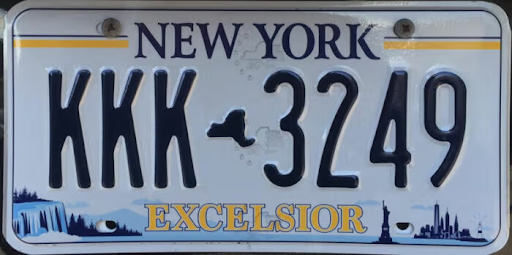
Sample: KKK3249
Issued to most privately owned vehicles in New York.
Specialty Plates
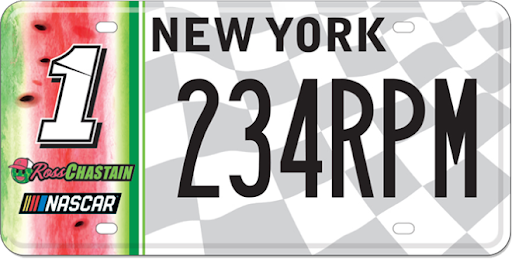
Sample: 234RPM
Support causes, colleges, organizations, or charities.
Commercial Plates
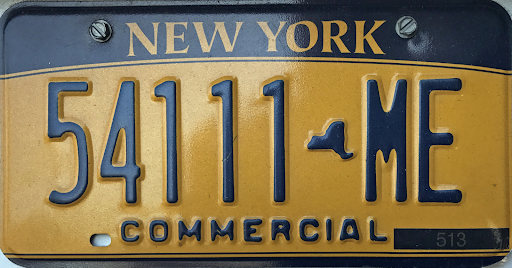
Sample: 54111ME
Assigned to vehicles registered for business purposes.
Historical Plates
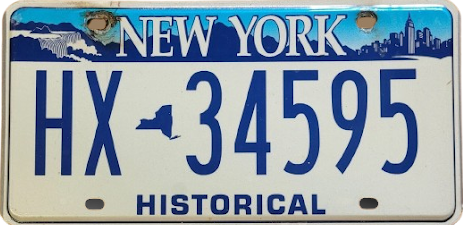
Sample: HX34595
Available for qualified classic and vintage vehicles.
Taxi & Livery Plates
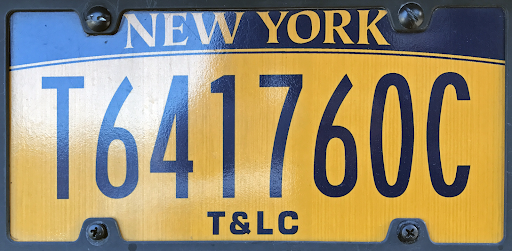
Sample: T641760C
Issued for licensed for-hire transportation vehicles.
Dealer Plates
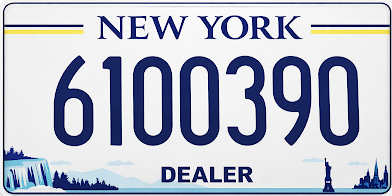
Sample: 6100390
Used by licensed vehicle dealers for inventory movement.
Government Plates
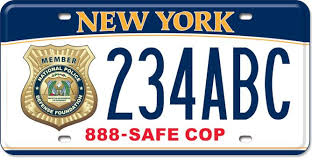
Sample: 234ABC
Assigned to official state and municipal vehicles.
New York Titling & Registration Overview
When you purchase or transfer a vehicle in New York, you must complete the title and registration with the NYSDMV. This process legally links you to the vehicle and allows you to receive license plates.
New York License Plate Renewal Options
New York vehicle registration must be renewed before expiration. Driving with expired plates can result in fines or penalties.
Requirement | Details | Official Form / Authority | Additional Notes |
|---|---|---|---|
Proof of Ownership | Signed title or bill of sale | NYSDMV | Required for used vehicles |
Identification | Valid driver's license or ID | NYSDMV | Must match registration name |
Insurance Proof | Active NY insurance coverage | NYSDMV | Mandatory before registration |
Registration Application | Completed registration form | NYSDMV | Required for plate issuance |
Fees Payment | Based on weight and class | NYSDMV | Subject to change |
New York Replacement & Temporary Plates
If your plate is lost, damaged, or stolen, you must request a replacement through the NYSDMV. Temporary registration documents may be issued while permanent plates are processed.
Renewal Method | Eligibility | Required Documents | Additional Notes |
|---|---|---|---|
Online Renewal | Most eligible vehicles | Registration notice | Fastest method |
Mail Renewal | Eligible registrations | Renewal notice | Processing time applies |
In-Person | All vehicle types | ID and payment | Visit the local DMV office |
Explore Other New York License Plate Search Tools
Looking for more than a New York license plate lookup? See other helpful vehicle verification tools below to strengthen your buying decision.
Window Sticker
A Window Sticker, also known as a Monroney Label, shows the original factory details of a vehicle, including MSRP, trim, engine specifications, fuel economy ratings, and installed options.
VIN Decoder
Our VIN Decoder translates the vehicle identification number into detailed vehicle specifications. It works for modern 17-character VINs and also supports vintage vehicles with shorter 5–14 character VIN formats, including pre-1980 models.
Looking for License Plate Information in Another State?
Moving from New York to another state? Explore our other state license plate lookup tools to verify vehicles nationwide before buying or selling.
FAQs about New York License Plate Lookup
Can you look up a license plate in NY?
Yes. You can run a New York license plate lookup using our tool to access vehicle-related records such as accident history, title brands, mileage data, and recall information.
Can you look up a license plate owner in NY?
No, you cannot publicly access the registered owner’s name through a plate search. The DPPA restricts disclosure of personal motor vehicle records. Our service focuses on vehicle history information, not private identity data, ensuring lawful and compliant use.
How do I perform a New York license plate owner lookup?
You cannot legally perform a public owner lookup for personal information. If identity verification is required for legal purposes, requests must go through the New York State DMV and meet approved DPPA conditions. For vehicle verification, our lookup tool provides compliant and lawful data.
What information can a NY license plate lookup reveal?
A New York license plate lookup can reveal vehicle specifications, associated VIN, title brands, mileage history, accident records, recall status, lien indicators, and usage type. This helps buyers confirm whether the vehicle’s background matches the seller’s claims before completing a transaction.
Can I see accident history with a NY license plate lookup?
Yes. Our system links the plate to vehicle records that include reported accident history when available. You can see the number of incidents, reported dates, and related damage indicators to better assess safety and value before purchase.
Is my search confidential?
Yes. Your New York license plate lookup is private and confidential. The vehicle owner is not notified when you run a plate search. This allows you to verify vehicle records discreetly before making financial decisions.
What information does a New York license plate lookup provide compared to free services?
Free plate tools often provide limited information, including vehicle make & model, specifications, and associated VIN. A full New York license plate lookup provides structured vehicle history records such as title checks, accident reports, mileage tracking, recall status, and lien indicators for deeper decision-making.
What if I only have the plate number?
That is enough to get started. Simply enter the New York plate number into our lookup tool. The system connects the plate to the associated VIN and retrieves available vehicle history data for review.
I’m not getting a VIN from my plate search—what’s the reason?
Some records may not return instantly due to recent registration changes, temporary plates, or limited reporting history. In such cases, using the VIN directly can sometimes provide faster confirmation.
What does Excelsior mean on NY plates?
“Excelsior” is New York’s official state motto, meaning “Ever Upward.” It appears on newer New York license plate designs issued by the NYSDMV.