
Make Smarter Decisions with Arizona License Plate Lookup
Not every problem shows up in photos. Access important background details, including accident history, title records, and damage reports, with an Arizona license plate lookup. So you can move forward with clarity and peace of mind.
Why Use Our Arizona License Plate Lookup Service
In Arizona, vehicles face intense heat, monsoon flooding, and heavy highway commuting. A plate lookup helps you confirm what the seller claims, and it helps you avoid costly surprises like branded titles, mileage rollback, or unresolved liens.
229.76
In 2024, the Arizona Automobile Theft Authority (AATA) 2025 Annual Report recorded a vehicle theft rate of 229.76 stolen vehicles per 100,000 residents, with 17,010 vehicles stolen statewide.
121,107
ADOT “Arizona Motor Vehicle Crash Facts” 2024, in their July 9, 2025 publication, documented 121,107 total crashes in 2024 (statewide, all roads).
1,228
ADOT “Arizona Motor Vehicle Crash Facts” reported 1,228 traffic fatalities in 2024. (2024 Crash Facts release referenced in 2025 coverage).
Who Should Use the Arizona License Plate Lookup Tool?
An Arizona license plate lookup is built for real-world decisions: buying, selling, trading in, registering, renewing, or importing. It turns a plate number into clear vehicle facts, so you move forward with confidence instead of guesswork.
Buyers
If you’re shopping for a used vehicle in Arizona, a plate lookup helps you confirm the story behind the listing. It’s a practical way to protect your budget, your safety, and your time by spotting history risks before you travel, negotiate, or pay.
Check for flood exposure during the monsoon season
Water damage is not always visible right away. The report will highlight flood brands or related damage history so you avoid electrical and corrosion problems later.
Reduce negotiation stress with facts
Facts create leverage. An Arizona license plate lookup report helps you negotiate calmly because you can point to documented records.
What You Can Discover from an Arizona License Plate Lookup
An Arizona license plate lookup will deliver a complete vehicle history report built for people who don’t want surprises. Here’s what you will see on the full report:
Vehicle Specifications
Your report starts with the identity of the vehicle, so you can verify you’re looking at the correct car in Arizona and not a misrepresented trim or swapped configuration.
Year, Make, Model
You will see the vehicle’s core identity details linked to the VIN, helping you confirm the Arizona listing matches what the manufacturer produced.
Trim
Trim-level confirmation helps you verify features, value, and equipment level, especially when sellers advertise upgraded packages without proof.
Engine & fuel type
You will get engine and fuel details that help confirm performance expectations and prevent buying a vehicle with the wrong powertrain.
Mileage History
Mileage is one of the strongest value signals. This section pulls mileage records across time so you can see consistency, patterns, and risk.
Mileage History from Multiple Sources
Your report consolidates mileage entries from reporting events, giving you a clearer picture than a single odometer photo can provide.
Rollback Detection and Alerts
If mileage decreases or conflicts across time, the report will highlight that risk so you can avoid odometer fraud decisions.
Annual Usage Patterns
You will see how mileage grows year-to-year, which helps estimate wear and whether the vehicle’s condition matches its usage story.
Lien/Loan Check
A lien can block ownership transfer even if the seller seems trustworthy. This section protects you from buying a vehicle with unresolved financial claims.
Lien Record Identification
The report will surface lien indicators so you can confirm whether the title is clear before you pay.
Dates and Locations
When lien data is available, timestamps and location context help you understand how current and relevant the financial claim appears.
Vehicle Use Type
How a vehicle was used matters as much as how it looks today. This section helps you understand wear patterns and expected maintenance.
Personally
Personal use usually indicates typical daily driving. The report helps you confirm if the vehicle lived a normal life or had heavier-duty patterns.
Fleet/commercial
Fleet vehicles can be well-maintained but heavily used. Seeing fleet signals helps you evaluate the condition with the right expectations.
Ownership History
Ownership patterns tell you how the vehicle moved through the market. This section helps you understand stability, transfer frequency, and where the vehicle lived.
Owner Count
A higher owner count in a short period can be a warning sign. The report displays the number of recorded owners to help you judge risk.
Ownership Timeline
You will see a time-based view of transfers, making it easier to spot quick flips, sudden ownership changes, or unusually short holding periods.
Registration Locations
This shows where the vehicle was registered over time. It helps you understand exposure to different climates, road conditions, and regional risks.
Duration with each owner
Longer ownership often suggests stability. Short ownership intervals can signal recurring issues or vehicles that were difficult to keep.
Accident Records
Accidents change safety, resale value, and long-term reliability. This section helps you understand what happened, when it happened, and what to ask next.
Number of Accidents Reported
The report highlights the total number of recorded accidents, giving you an immediate sense of risk level and inspection urgency.
Date of Reported Accidents
Dates help you understand recency. Newer incidents often require closer inspection, while older ones should be matched with repair proof.
Reported Accident Location
Location context can help confirm the timeline and reporting consistency, especially if the vehicle moved across states before the Arizona sale.
Damage History
Not all damage is classified as an “accident.” This section captures other damage signals that can explain future repair costs.
Fire Damage
Fire events can damage wiring, plastics, and structural components. This section helps you avoid vehicles with hidden electrical risk.
Flood Damage
Flood exposure can create long-term corrosion and electronic failures. This will show flood-related history indicators when recorded.
Hail Damage
Hail can affect body panels and glass. This section helps Arizona buyers understand if storm damage has been reported historically.
Recalls Check
Recalls are common, and open recalls can be serious. This section helps you see what is still needed for safety compliance.
Open Recall Information
Open recall entries are displayed clearly so you can schedule repairs and avoid driving with known safety defects.
Completed Recall Events
When completion is recorded, this section helps you confirm whether major recall items were already handled.
Manufacturer and Safety Agency Notices
This section reflects recall notices and safety communications, helping you understand why the recall exists and what the fix involves.
Theft Records
Buying a stolen vehicle can become a legal nightmare. This section helps confirm whether theft signals appear in recorded databases.
Stolen Status Check
The report will show theft-related indicators, helping you avoid vehicles that raise serious ownership concerns.
Recorded Theft Incidents
If a theft incident is recorded, this section helps you understand the nature of the record and whether recovery was noted.
Recovery and status notes
When recovery status is available, it helps clarify whether the vehicle was returned and properly processed before resale.
Warranty Status
Warranty information helps you plan ownership costs. This section gives you a clearer view of what coverage is likely relevant.
Basic warranty term
Available warranty term details will appear as a reference point for coverage expectations, helping you estimate whether coverage timeframes still matter.
Service & Maintenance Records
A well-maintained vehicle ages differently. This section summarizes service-related entries when they exist in reporting sources.
Scheduled Maintenance
Maintenance entries help confirm responsible ownership and reduce the chance of surprise breakdowns after purchase.
Part Replacements
This section can reveal replaced components, which helps explain the current condition and forecast future repairs.
Major or Minor Repairs
Seeing repair patterns helps you spot recurring issues and evaluate whether a vehicle was properly fixed after a problem.
Notes from inspections
Inspection notes can provide context that sellers don’t mention, helping you ask smarter questions and negotiate fairly.
Service frequency patterns
A consistent pattern supports reliability. Large gaps can signal neglect, even when the vehicle looks clean in photos.
Auction History
Auction entries often include condition details that never appear in private listings. This section helps you see what the vehicle looked like when it moved through wholesale channels.
Auction Date and Location
You will see where and when the vehicle was auction-listed, which helps validate the timeline and ownership transitions.
Condition Notes
These notes often reveal damage categories that sellers omit. They help you understand what happened before repairs or resale.
Number of photos taken at the auction
Photo volume indicates documentation quality. More photos often mean better evidence for comparing past vs. present condition.
How Our License Plate Lookup Works
Running a license plate lookup in Arizona is simple, even if you’ve never done one before.
Locate the Arizona license plate number
Enter the plate exactly as shown and choose the state, then submit to begin the lookup.
Fill in the Form
Input the license plate number and state into our form above.
Access Your Full Vehicle History Report
View your report instantly, including VIN-based specs and key history sections.
Supported Arizona Vehicle Types
Our system supports most Arizona license plates and VIN-linked vehicle types, from vehicles manufactured after 1981 to classic vintage car history checks. Get detailed reports for cars, SUVs, motorcycles, ATVs, vans, and more.
Cars
We support sedans, coupes, hatchbacks, and EVs. Use a plate lookup to check trim, mileage, title brands, and accident history before purchase or registration renewal.
SUVs
From compact crossovers to full-size SUVs, the report helps you verify drivetrain, prior use type, and damage history.
Vans & Minivans
Vans can be reliable, but expensive repairs may arise from neglected maintenance. Check service and ownership records to assess the vehicle’s care.
Motorcycles
Arizona motorcycles are supported. Check available theft records, title brands, and past damage, as bikes can be cheaply repaired and quickly resold.
ATVs
ATVs and off-road vehicles can still have ownership records in certain cases. If the vehicle has a plate record, the lookup helps confirm identity details and reduce fraud risk.
Commercial Vehicles
Many business vehicles run high mileage quickly. A license plate lookup in Arizona helps you spot commercial or fleet use signals and check for lien risks before purchase.
Guide to Arizona License Plates
Arizona offers many plate styles, from standard designs to charity plates and personalized plates. If you are comparing Arizona license plate options or planning an Arizona license plate renewal, it helps to know what type of plate you have and what rules apply. Arizona MVD also offers over 100 specialty plate designs and explains ordering and fees.
Types of Arizona License plate
Arizona plates use a combination of letters and numbers. See the types of license plates below:
Standard Passenger Plates
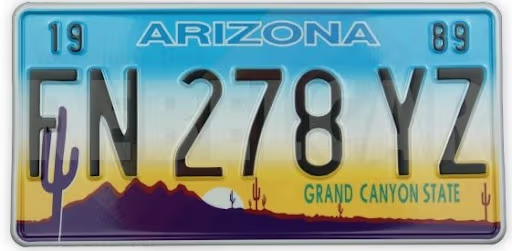
Sample: FN278YZ
The most common plate for private vehicles.
Specialty Plates
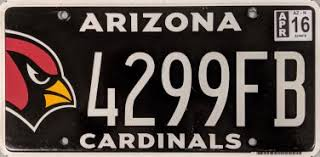
Sample: 4299FB
Arizona specialty license plates that support charities, schools, military groups, and public causes with unique designs.
Alternative Fuel Plates
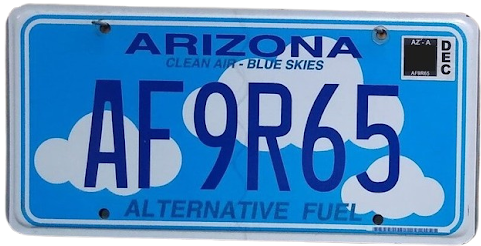
Sample: AF9R65
For eligible alternative fuel vehicles.
Disability Plates / Placards
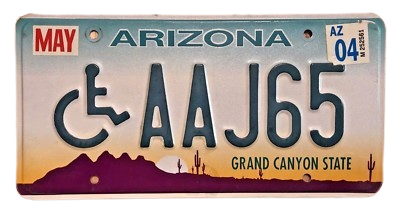
Sample: AAJ65
For eligible drivers with disabilities, special rules apply.
Digital License Plates
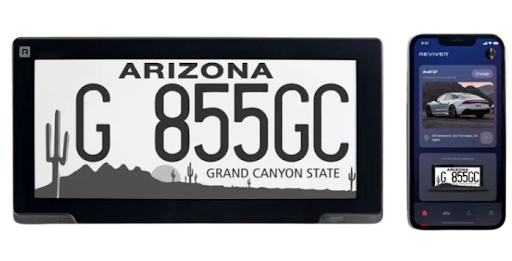
Sample: G855GC
Electronic display with approved device.
Temporary Tags
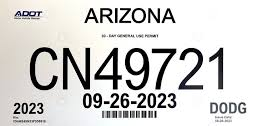
Sample: CN49721
Replacement process if damaged, lost, or stolen.
Arizona Titling & Registration Overview
Arizona usually handles title and registration together. If you buy a vehicle, Arizona law says you must apply for a title within 15 days of purchase. Arizona also uses electronic titles by default, and you can view title info through AZ MVD Now.
Arizona License Plate Renewal Options
Arizona makes renewal flexible. Most people can renew online in minutes, and ADOT also lists other ways, like phone, mail, and in-person options. Arizona also explains that registration documents and tabs are mailed, so your address should be correct before you renew.
Early renewal tip: If emissions testing is required, you can renew up to 90 days early. If emissions testing is not required, you can renew up to six months early.
Requirement | Details | Official Form / Authority | Additional Notes |
|---|---|---|---|
Apply for the title after purchase | Title application required within 15 days | ADOT MVD (Vehicle Title) | Often done with registration at the same time. |
Title & registration application | Completed and signed application required | Title and Registration Application (Form #96-0236) | Needed for many transfer situations. |
Proof of transfer | Signed title or bill of sale | Title Transfer Bill of Sale (Form #38-1306) (AZ vehicles) | Used when a paper title transfer is involved. |
Lien release (if needed) | Provide lien release when applicable | ADOT MVD guidance | Lienholder permission is required to change names when the lien is unpaid. |
Electronic titles | Titles stored electronically, paper title not automatic | AZ MVD Now (view title info) | Loan payoff titles can remain electronic. |
Replace a paper title | The owner of record can request a replacement | AZ MVD Now Title Replacement | Fee is $4.00. |
Plate options & fees | Standard and specialty plate costs differ | ADOT MVD Plates & Placards | Specialty plates: $25 initial + $25 annual, plus $25 more if personalized. Personalized plates add $25 annually. |
Plate replacement fee | Lost/damaged plate replacement | ADOT MVD Plates & Placards | Replacement cost is $5.00. |
Explore Other than Arizona License Plate Search Tools
Looking for more than just an Arizona license plate lookup? See other vehicle verification tools below.
Window Sticker
A window sticker, also known as the Monroney label, shows the vehicle’s original MSRP, factory-installed options, engine details, fuel economy ratings, and safety information. It helps you confirm how the Arizona vehicle was originally built and priced.
VIN Decoder
Our VIN Decoder allows you to check vehicle specifications instantly using the VIN. It works for modern 17-character VINs and also supports vintage vehicles with pre-1980s VINs that contain 5–14 characters.
FAQs about Arizona License Plate Lookup
Can you look up a license plate in Arizona?
Yes. You can run an Arizona license plate lookup using our secure tool. The report includes key vehicle history details such as title records, accident history, mileage logs, lien indicators, and recall information, based on available reporting data.
How to look up the license plate owner?
Personal owner information is protected under the Driver’s Privacy Protection Act (DPPA). Our Arizona license plate lookup does not provide private owner names or addresses. But it does provide verified vehicle-related history, such as the number of owners the vehicle had and how long they have kept the vehicle, to help you make safe decisions.
Can I find out if a vehicle was ever involved in an accident?
Yes, you can find out if a vehicle was ever involved in an accident. When you run an Arizona license plate lookup with VehiclesReport, the system connects the plate to the VIN and checks available accident reporting records.
If accidents were reported to insurance companies, state agencies, or other participating data sources, they will appear in the vehicle history section of your report.
What happens if you look up a license plate?
When you run a license plate lookup in Arizona, the system connects the plate to the VIN and generates a vehicle history report. You will see the recorded information, such as title status, accident records, mileage history, lien data, and recall checks.
Can I look up a temporary tag or a very new plate?
Very new or temporary plates may not yet be linked to complete databases. If the plate does not return results, you can try again later or use the VIN directly.
Does Arizona require a front plate?
Arizona generally requires one rear plate for most passenger vehicles. If you are unsure, you can confirm plate requirements through Arizona MVD guidelines before registering.
How to get a custom license plate?
Arizona drivers can apply for personalized or specialty plates through AZ MVD Now, as explained by ADOT. Fees vary depending on plate type. Before ordering a custom plate, it is smart to run a vehicle history report to ensure the car is worth registering long-term.
How many letters/numbers on a license plate?
Arizona plate formats vary depending on plate type and design. They typically include a combination of letters and numbers. When performing a license plate lookup in Arizona, always enter the exact characters as printed on the plate, and choose the right state.
What do I do if my license plate was stolen?
If your Arizona license plate is stolen, report it to local law enforcement and contact the Arizona MVD to request a replacement plate. ADOT explains that replacement plates require a small fee. After replacement, you can also run a license plate lookup to confirm your vehicle records remain accurate.