
Trace BMW Recalls by VIN
BMW has issued recalls spanning Takata airbags, fuel pumps, and electrical systems. Run any BMW VIN to surface open safety recalls, technical service campaigns, and unfinished dealer repairs tied to that exact car before you sign or drive.
What Is a BMW Recall Check by VIN?
A BMW recall by VIN search connects the vehicle identification number with available safety recall records. Depending on the available record, you may see the recall campaign, announcement date, affected BMW models or model years, estimated number of vehicles affected, component involved, safety risk, and recommended remedy.
A recall record applies to a specific campaign and vehicle population. Therefore, checking the VIN is important when you want to know whether an individual BMW may be affected.
Why BMW Recalls Matter for Used Cars?
Checking recall information before buying or selling a used BMW gives you another way to identify issues that may require attention, including:
Review the Affected Component
See whether the campaign involves airbags, braking, steering, electrical systems, fuel systems, software, or another component.
Compare the Model Year
A recall may affect only certain BMW model years or production periods, so the vehicle's exact year matters.
Check the Recall Announcement
The announcement date provides context about when the manufacturer or safety authority reported the campaign.
Improve Buyer Confidence
Clear information about known recall campaigns can make the vehicle's history easier for buyers to evaluate.
Check Performance Models
Owners of M models and other performance-focused BMWs can review recall records relevant to their specific vehicle.
Compare Similar Vehicles
Recall information can help collectors distinguish between individual vehicles with similar specifications.
How to Check BMW Recalls by VIN?
Checking a BMW recall by VIN number is straightforward. You can enter the vehicle's VIN or use the available license plate lookup option to begin researching the vehicle.
Locate Your BMW VIN
Locate the VIN on the vehicle, registration documents, insurance records, or the driver's-side dashboard.
Fill Out the Form
Enter the complete VIN into the BMW recall search field. A correct VIN helps connect the search with the appropriate vehicle.
Get Your Recall Reports
If an applicable recall remains open, contact an authorized BMW dealer to confirm the current repair status and available remedy
What a BMW Recall Report Will Show?
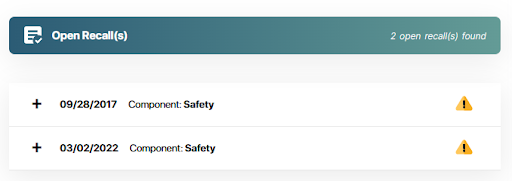
A BMW recall check can provide more context than simply showing whether a campaign exists. Available records may contain several details about the campaign and the vehicles included.
Campaign Number
A campaign number can help identify and distinguish a particular BMW safety recall.
Affected BMW Models
The record may identify specific BMW models included in the campaign.
Affected BMW Models
The record may identify specific BMW models included in the campaign.
Affected Component
The record may identify the component or vehicle system involved in the recall.
Common BMW Recall Themes
BMW recall campaigns can involve different systems depending on the model, production period, and specific campaign. These are areas owners may want to review when researching BMW recalls by VIN.
Takata Airbag Inflator Replacements
BMW was one of the larger automakers caught in the Takata airbag crisis, with millions of 3 Series, 5 Series, X3, X5, and M models from the early 2000s through the mid-2010s flagged for defective inflators.
High-Pressure Fuel Pump Failures
Direct-injection BMW engines, especially the N54 twin-turbo inline-six found in 135i, 335i, 535i, and Z4 models, were subject to extended warranties and recall-style customer service actions for high-pressure fuel pump failures.
PCV Valve Heater and Crankcase Ventilation
Several BMW gasoline models, including certain N20 and N26 four-cylinder engines used in 2 Series, 3 Series, 4 Series, and X1 vehicles, were recalled over a positive crankcase ventilation valve heater that could short-circuit.
Driveshaft and Suspension Component Recalls
BMW has issued a handful of recalls covering rear driveshafts, control arms, and suspension fasteners on models such as the X3, X4, X5, and X6, where the concern was loss of motive power or compromised handling.
What to Do If Your BMW Has an Open Recall?
If your BMW recall check by VIN shows an applicable unresolved campaign, do not treat the result as a complete diagnosis of the vehicle. Review the campaign information and confirm the current status with BMW or an authorized dealer.
Confirm the Recall Details
Review the recall number, affected component, model year, and safety information.
Contact an Authorized BMW Dealer
Ask an authorized BMW dealer whether the recall remains open for your vehicle.
Ask About the Remedy
The dealer can explain what repair, replacement, inspection, or software update is required.
Schedule the Recall Repair
If the recall applies and remains open, arrange the required service through an authorized repair facility
What a BMW Recall Check Cannot Confirm?
A BMW recall check by VIN is useful for identifying available safety campaign information, but it should not be treated as a complete mechanical inspection or vehicle history report.
Undocumented Repairs
Repairs that were never reported to a participating data source may not appear.
Dealer Appointment
The report cannot confirm whether an individual BMW dealer has scheduled the repair.
Parts Availability
A recall record does not guarantee that replacement parts are immediately available.
Aftermarket Modifications
A recall search cannot identify every aftermarket modification.
Need More Than BMW Recall Data?
A recall is only one part of a used BMW's history. If you are buying a BMW, you may also want to review a recorded history report. Here’s what you’ll find on our full VIN report:
Vehicle Specifications
Review available factory and vehicle-identification information.
Accident Records
See reported accident events connected to the VIN when available.
Damage History
Check available records for reported damage such as flood, fire, hail, or other events.
Mileage History
Compare recorded mileage across available historical records.
Title Records
Review available title brands and title-related events.
Ownership History
See available ownership and registration history without relying only on the seller's description.
Lien / Loan Records
Identify available financial claims connected to the vehicle.
Service & Maintenance Records
Review reported maintenance and repair activity when available.
Auction & Sales History
See available previous auction or sales listings and related information.
Recall Records
Review available recall information as one part of the vehicle's broader history.
Try Other BMW VIN Check Tools
Try out our other BMW check services
Window Stickers
Review available original window-sticker information to compare factory equipment, pricing, and vehicle configuration.
Free VIN Decoder
Check basic vehicle specifications, estimated market value, auction and online snapshot listings, with our FREE VIN Decoder.
License Plate Lookup
Use the license plate Lookup when you have the U.S plate number but do not have the VIN available.
BMW Recall Check FAQ
Where do I find the VIN on my BMW?
Look at the lower corner of the windshield on the driver's side, the driver-door jamb sticker, or the vehicle registration and insurance card. All three should match.
Does BMW pay for recall repairs?
Yes. Safety recall work is performed at no cost to the owner at any authorized BMW center, regardless of the vehicle's age, mileage, or how many times it has been resold.
How long does a typical BMW recall repair take?
Most recall repairs take between one hour and a full day, depending on the part. Airbag and wiring jobs are usually same-day; engine-related work may need the car overnight.
What does an open recall on a BMW actually mean?
It means BMW has identified a defect on your VIN and the remedy has not yet been performed. The car is still drivable in most cases, but the fix should be scheduled soon.
Will an open recall fail a state safety inspection?
Most US states do not fail a vehicle for an open recall, but a few jurisdictions and many lenders or fleet buyers will require it to be closed before sale or financing.
Can I check BMW recalls on a car I haven't bought yet?
Yes. A VIN-based recall lookup works on any BMW, including dealer inventory and private listings, so you can confirm the recall status before you commit.
Can I check BMW recalls for an older model?
Yes. Older BMWs can have historical or applicable recall records. The available information depends on the vehicle, campaign, model year, and records accessible for that VIN/Chassis numbers.